Fiberglass Insulation in Irvine, CA
Energy-Saving Fiberglass Insulation for Irvine, CA Homes — Licensed & Insured
Get expert fiberglass insulation in Irvine, CA. Home Energy Saver installs R-38 to R-60 attic insulation for Orange County homes. Call (949) 710-2596 for a free quote.
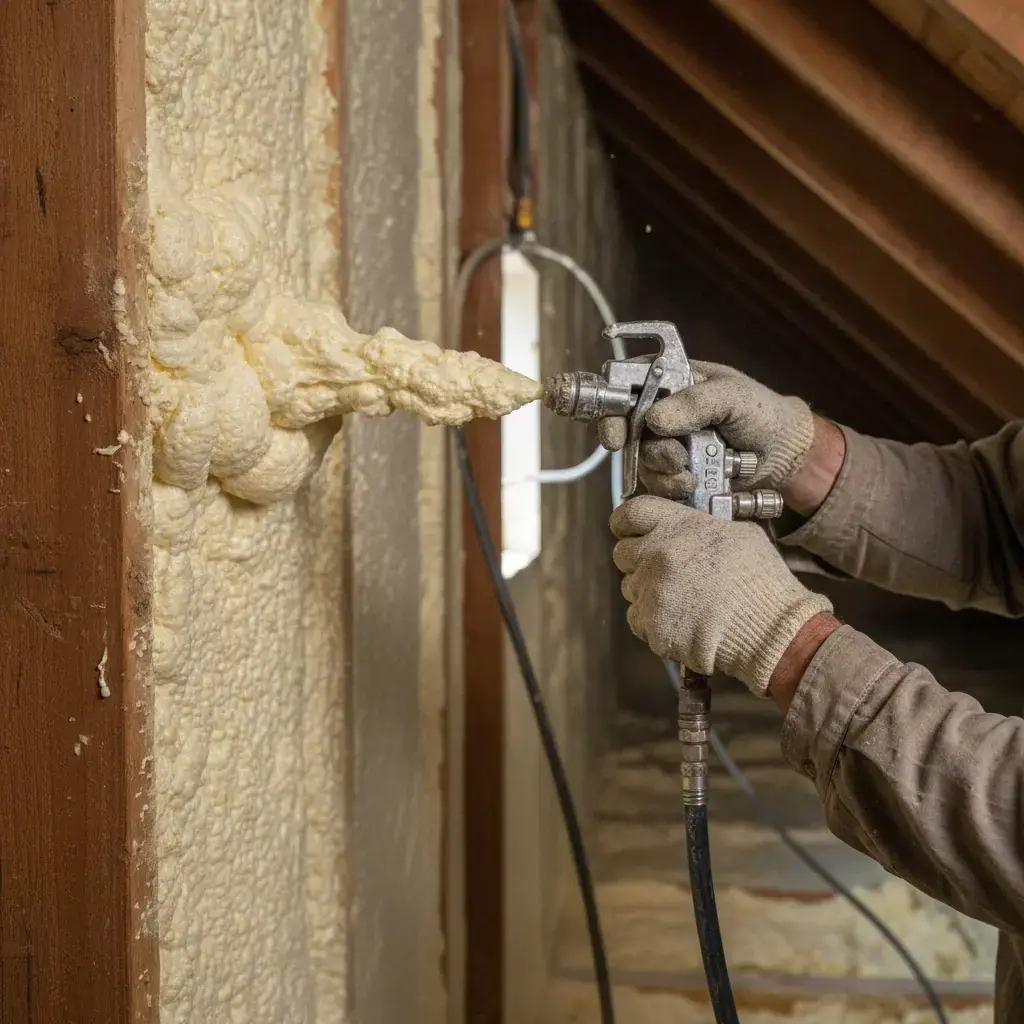
Fiberglass insulation is one of the most widely used and cost-effective thermal barrier solutions available to homeowners and commercial property owners in Southern California. Composed of extremely fine glass fibers, this material traps air to slow heat transfer, keeping your indoor environment comfortable year-round. At Home Energy Saver Insulation, we specialize in professional fiberglass insulation installation throughout Irvine, CA and the greater Orange County region.
Irvine’s unique Mediterranean-influenced climate — with summer highs routinely exceeding 90°F in inland neighborhoods like Northwood and Woodbridge, combined with cool marine-layer mornings — creates specific thermal performance demands that generic insulation approaches simply cannot meet. Our team understands the local building stock, the predominant construction methods used in Irvine’s planned communities, and the energy code requirements enforced by the City of Irvine Building Department. Whether you are insulating a newly built master-planned home or upgrading an older village-era property, we deliver solutions engineered for this market.
Understanding Fiberglass Insulation
Fiberglass insulation was first commercialized in the United States in the 1930s, following the accidental discovery by researcher Dale Kleist at Owens-Illinois that molten glass could be spun into fine, flexible fibers. By the post-World War II housing boom — a period that directly shaped early residential tracts in Orange County — fiberglass batts became the dominant insulation material in American residential construction. Today, fiberglass remains the most installed insulation type in the country, accounting for roughly 45 percent of the residential insulation market.
The material functions by creating millions of tiny air pockets within its fiber matrix. Because air is a poor conductor of heat, these pockets dramatically reduce the rate at which thermal energy moves through walls, ceilings, and floors. Fiberglass insulation is rated by R-value — a measure of thermal resistance. Higher R-values indicate greater resistance. For attic applications in California Climate Zone 8, which encompasses Irvine, Title 24 energy standards currently recommend a minimum attic insulation R-value of R-38, though many energy consultants advise upgrading to R-49 or R-60 for maximum utility bill reduction.
Read moreShow less
Fiberglass insulation comes in two primary forms: batts and rolls, which are pre-cut panels designed to fit standard stud and joist spacing, and loose-fill (blown-in) fiberglass, which is installed using a pneumatic blower to fill irregular cavities and existing attic floors. Both forms are non-combustible, do not absorb moisture when properly installed, and resist mold growth — all properties that matter significantly given Irvine’s coastal proximity and occasional high-humidity periods during fall Santa Ana wind reversals.
In Irvine’s planned community context, properties span several distinct building eras. The original Irvine Company village developments built in the 1970s and early 1980s — including Woodbridge and University Park — often contain insulation that has settled, degraded, or was installed to standards far below current code. Newer master-planned villages like Portola Springs (developed primarily after 2010) were built to stricter Title 24 requirements but may still benefit from supplemental insulation upgrades as air sealing practices have evolved. Learn more about our attic insulation services
Why Fiberglass Insulation Is Needed in Irvine, CA
Irvine presents a deceptively demanding thermal environment. Because the city sits approximately 10 to 15 miles inland from the Pacific Ocean, it experiences a wider daily temperature swing than coastal cities like Newport Beach or Laguna Beach. On a typical summer afternoon, temperatures in Irvine’s northern neighborhoods such as Northwood or Stonegate can reach 95°F to 100°F, while the same morning may have started at 62°F under a thick marine layer. This 30- to 35-degree daily delta forces HVAC systems to work significantly harder than they would in a climate with less thermal variability — and under-insulated homes bear the full brunt of that workload.
The Santa Ana wind events that affect Irvine each autumn and winter add another layer of complexity. During significant Santa Ana episodes — such as the prolonged event in October 2017 that drove temperatures in Orange County above 100°F and relative humidity below 5 percent — poorly insulated homes lose conditioned air at an accelerated rate through wall cavities and attic bypasses. The reverse stack effect created during these hot, dry wind events causes conditioned air to be drawn out through any available gap, making both insulation quality and air sealing critically important.
Read moreShow less
Irvine’s soil conditions also contribute indirectly to insulation needs. The Irvine Basin is underlain by expansive clay soils, particularly in older village areas. Seasonal soil movement can cause minor but cumulative shifts in framing over decades, gradually opening small gaps in insulation coverage — particularly in wall cavities and at attic hatch penetrations. In crawl space environments found in some of Irvine’s hillside properties near the Quail Hill and Shady Canyon communities, ground moisture vapor migration through unencapsulated crawl spaces can degrade batt insulation performance over time, reducing effective R-value by as much as 20 to 40 percent when fiberglass becomes even slightly damp.
Energy costs in Irvine are a significant driver. Southern California Edison, the primary electric utility serving Irvine, applies tiered rate structures where consumption above baseline levels — approximately 300 to 500 kWh per month for a typical residential customer — triggers substantially higher per-kilowatt-hour charges. Homeowners in Irvine’s Turtle Rock or Northpark communities routinely report summer electricity bills exceeding $400 to $600 per month in inadequately insulated homes. Properly installed fiberglass insulation at code-minimum or above-code R-values has been documented to reduce cooling energy consumption by 15 to 30 percent in similar California Climate Zone 8 conditions.
Commercial and mixed-use properties in the Irvine Spectrum, Irvine Business Complex, and Great Park neighborhoods face their own insulation challenges. Many tilt-up concrete commercial buildings constructed in the 1980s and 1990s contain minimal roof deck insulation, causing significant heat gain through flat or low-slope roof assemblies. Upgrading to high-density fiberglass or combining fiberglass with other insulation methods is a common energy improvement strategy for these property types. Explore our spray foam insulation options for commercial properties
Free, no-obligation estimates
Talk to Home Energy Saver Insulation
Tell us what you need and we’ll take it from there.
Signs You Need Fiberglass Insulation in Irvine
Energy and Comfort Indicators
- Monthly electricity bills from Southern California Edison consistently exceed your neighborhood average, particularly between June and October.
- Certain rooms — especially those on the top floor beneath an attic — feel noticeably hotter or cooler than the rest of the house regardless of HVAC adjustments.
- Your HVAC system runs almost continuously during summer afternoons yet struggles to maintain the thermostat set point.
Physical and Structural Signs
- Visible gaps, compression, or missing sections of batt insulation when viewed in the attic.
- Attic insulation depth measuring less than 10 inches — the approximate threshold for R-38 performance in standard blown fiberglass.
- Discolored or stained insulation, which may indicate air movement or moisture infiltration through the material.
- Insulation that appears matted, flattened, or has shifted away from exterior wall areas.
Age and History Indicators
- Your home was built before 1990 and insulation has never been replaced or supplemented — highly relevant for Woodbridge or University Park village homes.
- Recent renovation work disturbed existing insulation without full reinstallation.
- Prior pest control treatment or rodent infestation resulted in soiled or removed insulation sections.
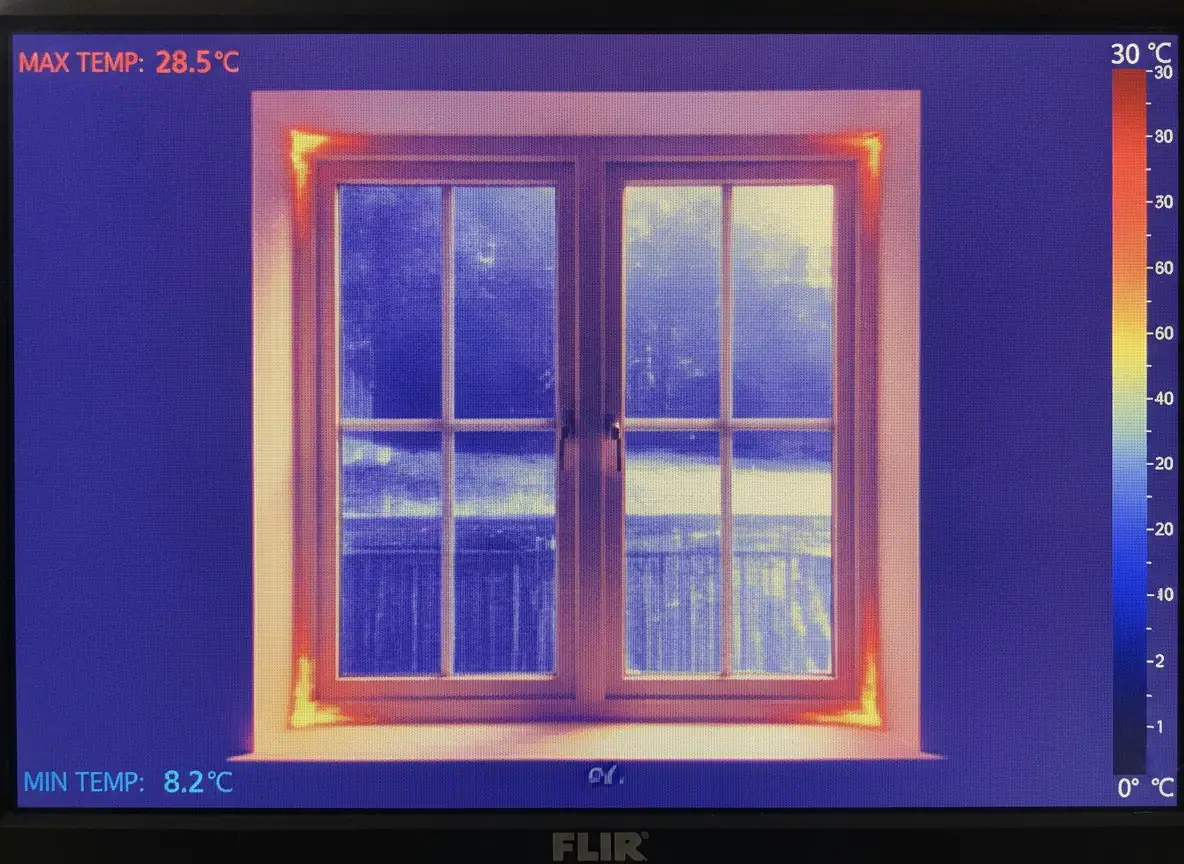
Urgent indicator: If your attic temperature during a July afternoon exceeds 140°F — measurable with an inexpensive IR thermometer — immediate insulation and ventilation assessment is warranted to protect both occupant comfort and roofing materials.
Fiberglass Insulation Methods and Approaches
Fiberglass Batt and Roll Insulation
Pre-cut fiberglass batts are the standard approach for new construction wall cavities and for attic floor areas with uniform joist spacing. In Irvine’s newer Portola Springs and Great Park Neighborhoods developments, where framing is typically consistent 16-inch or 24-inch on-center stud spacing, batts provide fast, predictable coverage. R-13 and R-15 batts are standard for 2×4 walls; R-21 high-density batts fit 2×6 framing common in post-2006 construction.
Blown-In Fiberglass (Loose-Fill)
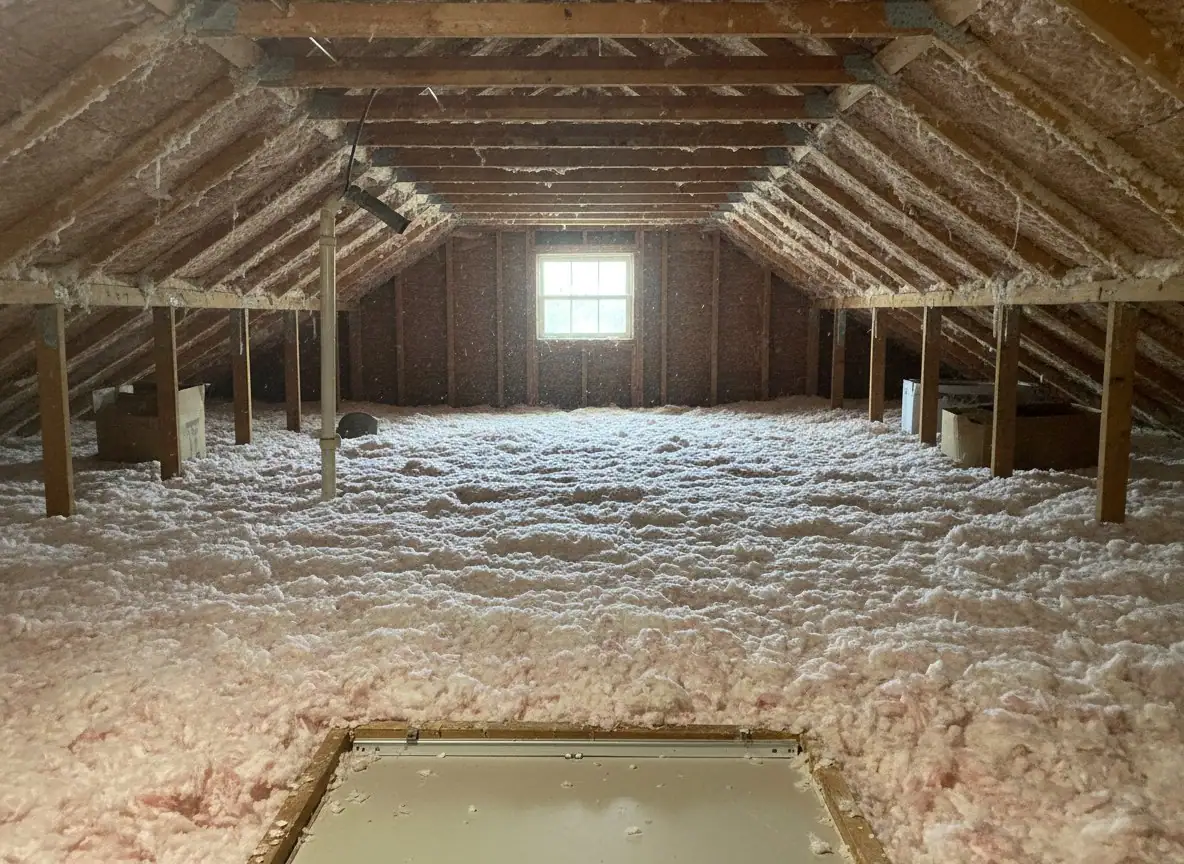
Loose-fill fiberglass is the preferred method for retrofitting existing attics, particularly in older Irvine village homes in Woodbridge and University Park where full rafter access is limited. Discover our blow-in insulation services Blown-in material conforms to irregular framing, fills around existing HVAC equipment, and can be layered over existing insulation when air sealing is completed first. Target depth for R-49 in blown fiberglass is approximately 16 inches using standard-density product.
High-Density Fiberglass Batt (Friction-Fit)
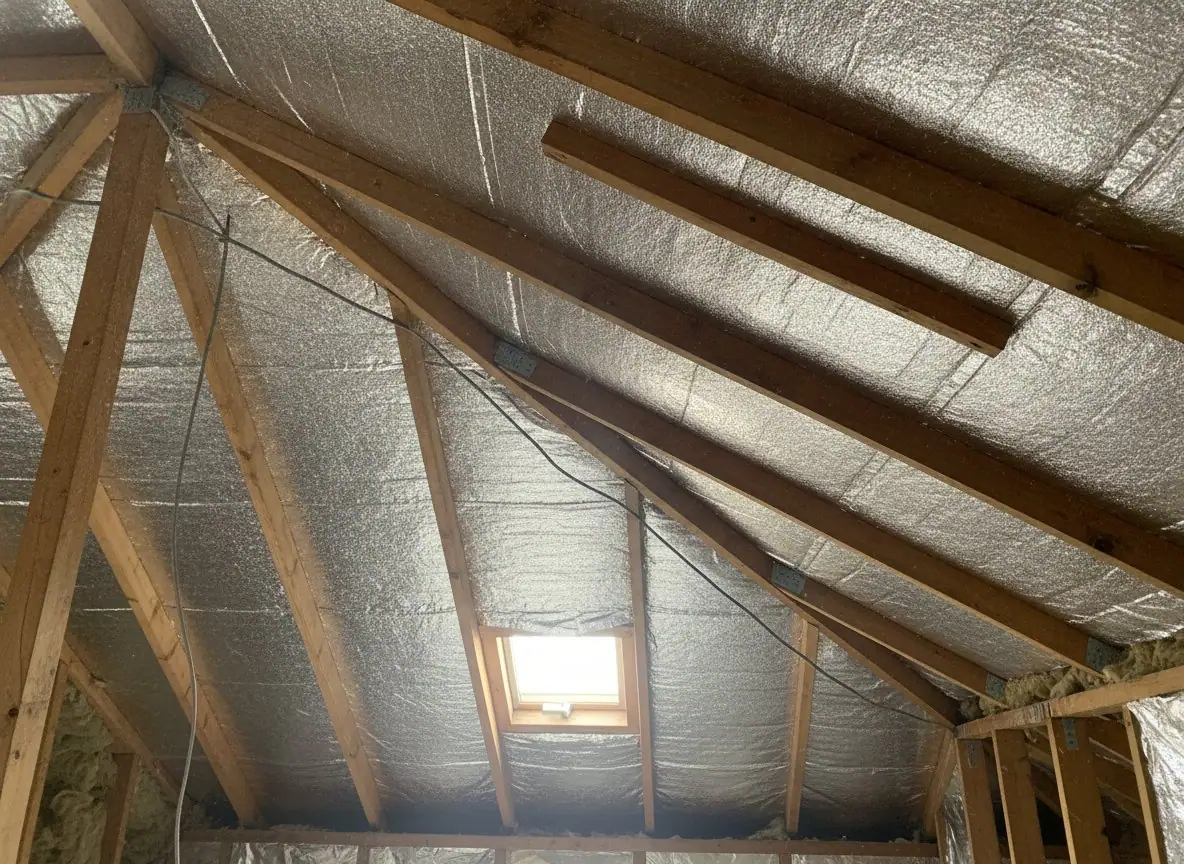
High-density “cathedral cut” batts are used in cathedral ceiling assemblies and roof rafter bays where depth is constrained. Several Irvine custom homes in Turtle Rock and Shady Canyon feature vaulted ceilings that require this approach to maximize R-value within a limited cavity depth while maintaining required ventilation channels above the insulation.
Combination Fiberglass and Air Sealing Systems
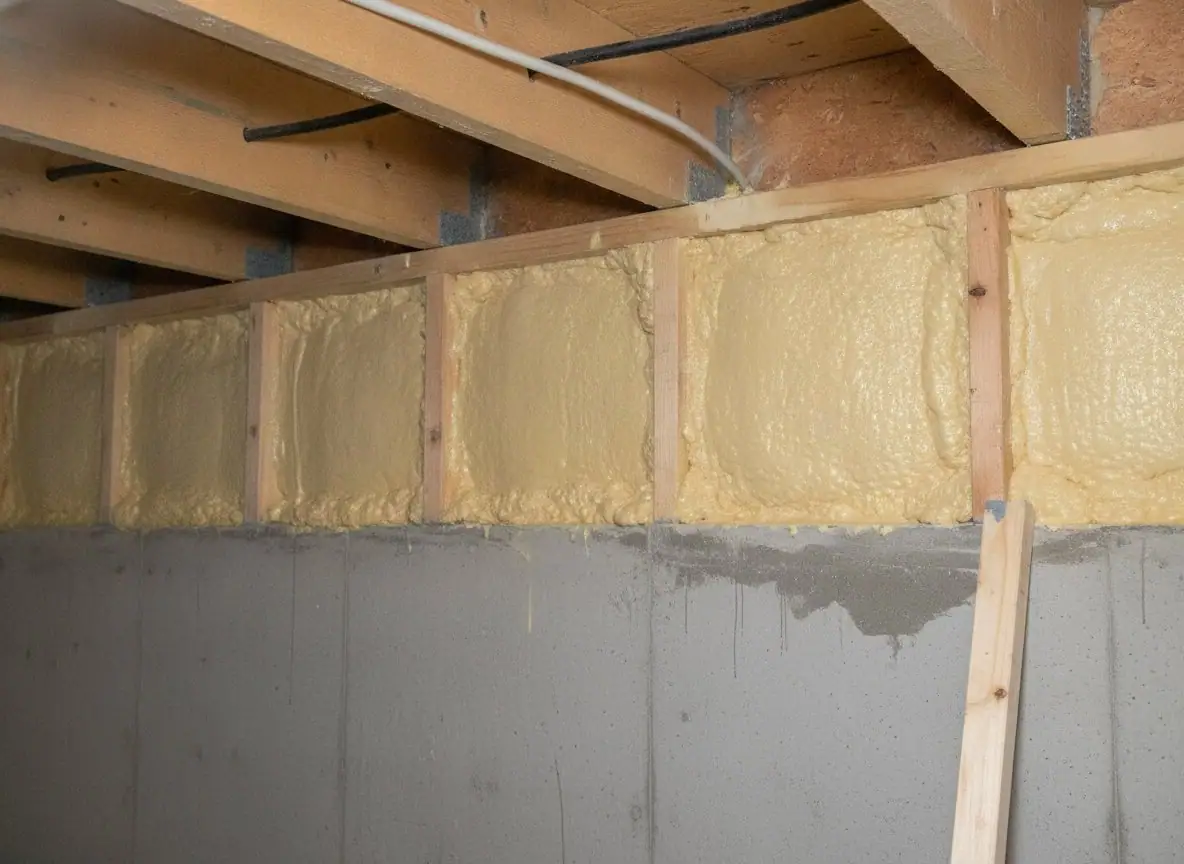
For maximum performance, particularly in homes seeking to qualify for Southern California Edison rebate programs, we pair fiberglass installation with comprehensive air sealing using two-component spray foam at all penetrations. This hybrid approach is increasingly common in Irvine’s energy-conscious homeowner community and can improve whole-home energy performance well beyond what either measure achieves independently. Learn more about spray foam insulation
Fiberglass Insulation Cost in Irvine, CA
Understanding the investment involved in fiberglass insulation helps Irvine homeowners plan appropriately and evaluate proposals accurately.
Typical Price Ranges
- Attic blown-in fiberglass (retrofit, 1,000–1,500 sq ft attic): $1,200 – $2,400 depending on existing conditions and target R-value.
- Attic batt insulation (new construction or full replacement): $1,500 – $3,000 for a typical Irvine single-family home.
- Wall cavity batt insulation (during renovation): $0.50 – $1.50 per square foot of wall area, with most Irvine projects ranging from $800 to $2,500 depending on scope.
- Crawl space fiberglass batt insulation: $1,500 – $3,500 depending on crawl space height, moisture conditions, and linear footage. See our crawl space insulation service page
- Combined insulation removal and replacement: Add $1.00 – $2.00 per square foot for professional removal prior to new installation.
Read moreShow less
Factors Affecting Cost in Irvine
- Attic accessibility: Many Irvine tract homes have low-pitch roof lines and restricted attic access hatches, which increases labor time.
- Existing insulation condition: Contaminated or rodent-damaged insulation requires removal before installation, adding cost.
- HOA requirements: Some Irvine HOAs require debris containment protocols and specific work-hour restrictions that affect scheduling and labor cost.
- Permit requirements: City of Irvine building permits are required for insulation upgrades in certain project scopes; permit fees typically range from $100 to $350.
Southern California Edison and the California Energy Commission offer rebates and incentives for qualifying insulation upgrades. We can help you identify and apply for applicable programs. Call (949) 710-2596 for a no-obligation quote specific to your property.
Neighborhoods We Serve in Irvine
Woodbridge (Built 1970s–1990s)
One of Irvine’s original master-planned villages, Woodbridge features a mix of single-family homes, condominiums, and townhomes constructed primarily during the 1970s and 1980s. Insulation in these properties is frequently original and well below current Title 24 standards — attic insulation depths of 3 to 5 inches (R-11 to R-15) are common findings. Many Woodbridge homes also have vented crawl spaces that benefit from combined fiberglass and encapsulation treatment. Learn about crawl space encapsulation
Turtle Rock (Built 1970s–1990s)
Situated in the hills above UC Irvine, Turtle Rock homes often feature custom or semi-custom construction with vaulted ceilings and larger attic spaces. The hillside orientation creates additional wind exposure, making thorough air sealing alongside insulation upgrades particularly important.
Portola Springs (Built 2010s–Present)
As one of Irvine’s newer planned communities, Portola Springs homes were built to post-2010 Title 24 standards. However, owners seeking above-code performance for lower utility bills frequently upgrade attic insulation from the code-minimum R-38 to R-49 or R-60 through blown-in topping installations.
Northwood (Built 1980s–2000s)
Northwood’s location in one of Irvine’s warmest inland microclimates — where summer temperatures frequently exceed those recorded in coastal areas by 8 to 12 degrees — makes optimal attic insulation particularly impactful for energy bill reduction.
Fiberglass Insulation Maintenance Tips for Irvine Homeowners
- Inspect your attic annually in October, after the summer heat season and before winter rains, to check for insulation displacement, pest activity, or moisture intrusion through roof penetrations.
- Check attic insulation depth using the labeled depth rulers installed by your insulation contractor. If depth has decreased by more than 1 inch from the installed level, contact a professional for evaluation.
- Keep attic vents clear. Irvine’s mature tree canopy in communities like Woodbridge and University Park can deposit leaf debris in soffit vents, restricting airflow and raising attic temperatures.
- Address roof leaks immediately. Even minor water intrusion from winter storms — which average approximately 12 to 14 inches of annual rainfall in Irvine — can saturate fiberglass insulation and permanently reduce its R-value.
- Seal gaps around new utility penetrations after any HVAC, plumbing, or electrical work that passes through insulated assemblies.
- Monitor for pest activity. Roof rats and squirrels are active in several Irvine neighborhoods and can tunnel through or nest in attic insulation, requiring remediation and replacement.
- Do not compress insulation by storing items directly on attic floor insulation. Use raised platform boards to create walkable attic paths without degrading R-value.
- Review your SCE bills each spring to establish a baseline. A sudden increase in cooling season energy use without a rate change may indicate insulation settlement or air sealing failure.
Why Choose Home Energy Saver Insulation in Irvine
Home Energy Saver Insulation is a dedicated insulation contractor serving Irvine and all of Orange County. Our team brings focused, specialized expertise in California residential and commercial insulation applications — we are not a general contractor treating insulation as an afterthought. We understand the specific building types, HOA protocols, and local permitting requirements unique to Irvine’s master-planned communities.
Our technicians are trained on California Title 24, Part 6 energy compliance requirements and stay current with updates to Climate Zone 8 standards that directly affect Irvine properties. We work with homeowners, property managers, and commercial building owners across the full spectrum of insulation needs — from simple attic top-ups to comprehensive insulation removal and replacement projects.
Read moreShow less
We serve the complete Orange County region including Irvine, Fountain Valley, Huntington Beach, Santa Ana, Anaheim, Newport Beach, Mission Viejo, and all surrounding communities. Every project begins with a thorough on-site assessment, and we provide transparent, itemized proposals before any work begins.
Contact us at (949) 710-2596 to speak with an Irvine insulation specialist today. Schedule your free assessment online
FAQ
Frequently Asked Questions About Fiberglass Insulation in Irvine, CA
How much does fiberglass insulation cost in Irvine, CA?
The cost for fiberglass insulation in Irvine typically ranges from $1,200 to $3,500 for a standard residential attic project, depending on the square footage, target R-value, existing insulation condition, and accessibility. Wall cavity insulation during a renovation runs approximately $0.50 to $1.50 per square foot of wall area. We provide itemized written quotes after an on-site assessment so you know exactly what you are paying for before any work begins. Call (949) 710-2596 for a free estimate.
What R-value do I need for my Irvine home?
Irvine falls within California Climate Zone 8. California Title 24 energy standards require a minimum of R-38 for attic insulation in this zone, but many energy consultants recommend R-49 or R-60 for maximum energy savings given Irvine’s warm inland temperatures. Wall insulation minimums are R-13 for 2×4 framing and R-21 for 2×6 framing. We assess your specific home and recommend the R-value that provides the best return on investment for your situation.
How long does fiberglass insulation installation take in an Irvine home?
For a typical Irvine single-family home with a 1,200 to 1,800 square foot attic, blown-in fiberglass installation takes approximately 4 to 8 hours including air sealing preparation. Projects requiring prior insulation removal may take a full day or extend to two days depending on the volume of material to be removed. We schedule most projects within 1 to 2 weeks of proposal acceptance.
Does fiberglass insulation work in Irvine’s climate?
Yes — fiberglass insulation is well-suited to Irvine’s Mediterranean climate. Its primary function is resisting heat transfer, which directly addresses Irvine’s challenge of hot summer afternoons and significant daily temperature swings. When properly installed with comprehensive air sealing, fiberglass insulation can reduce cooling energy consumption by 15 to 30 percent in Climate Zone 8 conditions typical of Irvine.
Do I need a permit for insulation work in Irvine?
Permit requirements depend on project scope. Simple insulation additions in existing attics may not require a permit, but insulation replacement combined with electrical or HVAC work, or insulation in new construction, typically requires a City of Irvine building permit. We advise you on permitting requirements during the assessment phase and can manage the permit application process on your behalf when required.
How do I know if my insulation in my Irvine home is still effective?
Key indicators include high summer electricity bills, rooms that are difficult to keep cool, an attic insulation depth of less than 10 inches, or visible settling and compression of existing material. For homes built before 1990 — including much of Irvine’s Woodbridge, University Park, and Turtle Rock communities — insulation has likely degraded significantly from its original installed R-value. A professional assessment provides a definitive answer.
Can fiberglass insulation help with noise reduction in Irvine?
Yes. While not the primary function, fiberglass batt insulation provides meaningful sound attenuation, which is valued by homeowners near Irvine’s busier arterials such as Culver Drive, Jeffrey Road, and Alton Parkway, as well as properties near John Wayne Airport in the western portions of the city. Interior wall fiberglass batts reduce airborne sound transmission between rooms and from exterior traffic noise.
Does Home Energy Saver Insulation serve areas outside Irvine?
Yes. We serve all of Orange County including Fountain Valley, Huntington Beach, Santa Ana, Anaheim, Newport Beach, Mission Viejo, Laguna Beach, Laguna Niguel, Lake Forest, Tustin, Aliso Viejo, Costa Mesa, Fullerton, Garden Grove, Laguna Hills, Brea, Buena Park, and Westminster. Contact us at (949) 710-2596 to confirm service availability for your specific location.
Get a Free Fiberglass Insulation Quote in Irvine Today
If your Irvine home is not performing as efficiently as it should — whether that means high Southern California Edison bills, inconsistent room temperatures, or insulation that has not been updated since your home was built — Home Energy Saver Insulation is ready to help. Our team serves Irvine and all of Orange County with professional fiberglass insulation installation, replacement, and complementary services including attic insulation, blow-in insulation, insulation removal, and crawl space solutions.
Getting started is simple. Call us at (949) 710-2596 to speak directly with an Irvine insulation specialist or to schedule your free on-site assessment. We provide transparent, written proposals with no pressure and no obligation. Request your free estimate online and take the first step toward a more comfortable, energy-efficient Irvine home today.
Get in touch
Find insulation help near you
Request a free estimate online or give us a call — our team will follow up quickly.
- Call us(949) 710-2596
- Visit22 Thomas, Irvine, CA 92618
- HoursMon-Sun 07:00-19:00