Blown-in insulation is one of the most effective and efficient methods for improving energy performance in residential and commercial properties throughout Irvine, California. This technique involves mechanically blowing loose-fill insulating material — typically cellulose or fiberglass — into attic spaces, wall cavities, and other hard-to-reach areas to create a seamless thermal and acoustic barrier.
Irvine’s unique Mediterranean climate, with its warm, dry summers and mild but variable winters, creates specific demands on home insulation systems. The city’s mix of master-planned communities, newer tract homes, and aging HOA-governed properties means that insulation needs vary widely from neighborhood to neighborhood. At Home Energy Saver Insulation, our team of professional insulation contractors brings deep knowledge of Irvine’s construction styles, climate conditions, and energy codes to every project. Whether you’re dealing with a hot attic in Woodbridge or drafty walls in Northwood, we deliver blown-in insulation solutions built for Southern California’s real conditions. Call us today at 949-710-2596.
Understanding Blown-In Insulation
Blown-in insulation, also called loose-fill insulation, has been used in residential construction since the early 20th century, evolving significantly with advances in materials science and installation equipment. The method works by using a blowing machine to propel small particles of insulating material into building cavities, allowing the material to conform to irregular shapes, fill gaps around obstructions, and achieve consistent coverage that batt insulation often cannot match.
There are two primary materials used in blown-in insulation today:
- Cellulose: Made from 80–85% recycled paper products treated with borate compounds for fire and pest resistance, cellulose is a dense, eco-friendly option that achieves an R-value of approximately R-3.2 to R-3.8 per inch.
- Fiberglass loose-fill: Composed of spun glass fibers, this material offers an R-value of approximately R-2.2 to R-2.7 per inch and is highly moisture-resistant, making it suitable for certain coastal and humid conditions.
Read moreShow less
In Irvine and throughout Orange County, blown-in insulation is particularly well suited to the region’s dominant housing stock. The city was master-planned beginning in the late 1960s by the Irvine Company, and much of its housing inventory consists of tract homes built between the 1970s and 2000s. Many of these homes were built with minimal attic insulation — often just R-11 to R-19 batts — that have degraded significantly over the decades. As California’s Title 24 energy codes have become progressively stricter (reaching their most recent update in 2022), homeowners are discovering that their existing insulation is well below current recommended levels of R-38 to R-60 for attic spaces in Climate Zone 8, which covers Irvine.
Blown-in insulation is also highly effective for retrofitting existing homes without major renovation, as it can be installed through small access holes, making it the go-to choice for Irvine homeowners who want maximum energy performance with minimal disruption to their living spaces.
For homeowners who need a complete attic solution, our attic insulation services complement blown-in installation with comprehensive coverage and air sealing.
Why Blown-In Insulation Is Needed in Irvine, CA
Irvine’s Climate Zone 8 Demands
Irvine sits within California’s Climate Zone 8 (Southern California Coastal), which is defined by hot, dry summers where temperatures in inland areas of Irvine can regularly exceed 95°F in July and August, while coastal-influenced neighborhoods near the Great Park or University Research Park may stay 5–8°F cooler. Winter temperatures typically range from 45°F to 65°F, but nighttime drops in hillside communities like Turtle Rock and Quail Hill can push toward 38°F, stressing heating systems in poorly insulated homes. The temperature delta between an uninsulated attic (which can reach 140–150°F on summer afternoons) and the conditioned living space below is one of the primary drivers of energy waste in Irvine homes.
The Impact of the Santa Ana Wind Events
Santa Ana wind events, which typically occur between October and March, bring extremely dry, hot offshore winds that can spike Irvine temperatures above 100°F even in late autumn. During the October 2017 and November 2019 Santa Ana events, parts of Orange County, including Irvine’s eastern hillside communities, experienced sustained winds above 50 mph and temperatures exceeding 95°F with relative humidity dropping below 10%. These events rapidly heat attic spaces and push conditioned air out of homes through gaps and poorly insulated cavities. Blown-in insulation, because it fills every crevice uniformly, reduces this infiltration significantly compared to batt-style alternatives.
Aging Construction in Established Irvine Villages
Many of Irvine’s original villages — including Woodbridge (developed 1975–1990), Northwood (developed 1978–1993), and Westpark (developed 1984–1995) — contain homes where the original insulation has compacted, degraded from moisture intrusion, or been disturbed by pest activity. Studies of similar-era California tract homes show that fiberglass batt insulation loses up to 40% of its effective R-value after 20–30 years due to settling and compression. A home in Woodbridge built in 1982 with original R-19 attic batts may today be performing at only R-11 to R-13, far below the current Title 24 requirement of R-38 minimum for new construction in Climate Zone 8.
The Irvine Spectrum and Great Park Area Growth
Newer developments in the Great Park Neighborhoods, Portola Springs, and areas surrounding the Irvine Spectrum have been built to more modern codes, but even these homes benefit from blown-in insulation upgrades when homeowners seek to exceed baseline requirements and reduce HVAC runtime. Irvine’s average residential electricity cost of approximately $0.28–$0.32 per kWh (among the highest in Orange County due to SCE rate structures) makes every improvement to thermal efficiency directly impactful on monthly utility bills.
Rodent and Pest Activity Degrading Existing Insulation
Irvine’s proximity to the Irvine Open Space Preserve and Peters Canyon Regional Park means that roof rats, mice, and other small mammals frequently enter attic spaces, particularly in homes along the eastern hillside communities. Nesting activity shreds and compacts existing batt insulation, reducing its effectiveness and creating hygiene hazards. Blown-in insulation following professional rodent proofing and attic cleaning provides a fresh thermal layer that restores performance. Our insulation removal service prepares affected attics before new blown-in material is installed.
Free, no-obligation estimates
Talk to Home Energy Saver Insulation
Tell us what you need and we’ll take it from there.
Signs You Need Blown-In Insulation in Irvine
Energy and Comfort Indicators
- Monthly SCE electric bills exceeding $250–$350 during July–September in a standard 1,800–2,200 sq ft Irvine home
- Rooms on the top floor noticeably hotter (more than 5°F difference) than lower floors during afternoon hours
- HVAC system running continuously during Santa Ana conditions without reaching the set temperature
- Cold drafts near exterior walls or ceiling perimeters during winter nights
Physical and Visual Symptoms
- Visible gaps or thinning in attic insulation when viewed from an access hatch
- Insulation depth measuring less than 10 inches in the attic (indicating below R-38 performance)
- Compressed or matted batt insulation that has lost its loft
- Evidence of rodent nesting, droppings, or tunneling within existing insulation material
- Dark staining or moisture damage on insulation surfaces indicating water infiltration
Urgency Indicators
- Preparing to sell your home and wanting to meet or exceed Title 24 energy disclosure requirements
- Recent attic pest infestation requiring full insulation removal and replacement
- Planning to add or replace HVAC equipment — new systems perform best in properly insulated envelopes
- Humidity or condensation visible on interior ceilings during winter months
Our process
Our Blown-In Insulation Process in Irvine
Home Energy Saver Insulation follows a systematic, multi-step installation process tailored to Irvine’s specific housing types and climate demands. Here is what to expect from start to finish:
- 01
Comprehensive Energy Assessment (1–2 Hours)
Our technician inspects your attic or wall cavities, measuring existing insulation depth, identifying air leakage points, and documenting any moisture, pest, or structural issues. We note the construction era of your home — critical for Woodbridge or Northwood
- 02
Insulation Removal (If Required) (2–6 Hours)
If existing insulation is contaminated, severely degraded, or too thin to build upon, we perform a full removal using HEPA-filtered vacuum equipment. This is especially common in Irvine homes with rodent damage. Learn more about our insulation removal services
- 03
Air Sealing (1–2 Hours)
Before any insulation is installed, our crew seals all penetrations — top plates, recessed lights, HVAC boot connections, and attic hatch perimeters — using foam and mastic sealants. This step is essential in Irvine’s older Northwood and Westpark tract homes,
- 04
Material Preparation and Machine Setup (30–60 Minutes)
We set up our commercial-grade blowing machine outside your home, running a flex hose through the attic access. We select the appropriate material — cellulose or fiberglass loose-fill — based on your attic’s moisture profile and your performance goals.
- 05
Blown-In Insulation Installation (1–4 Hours)
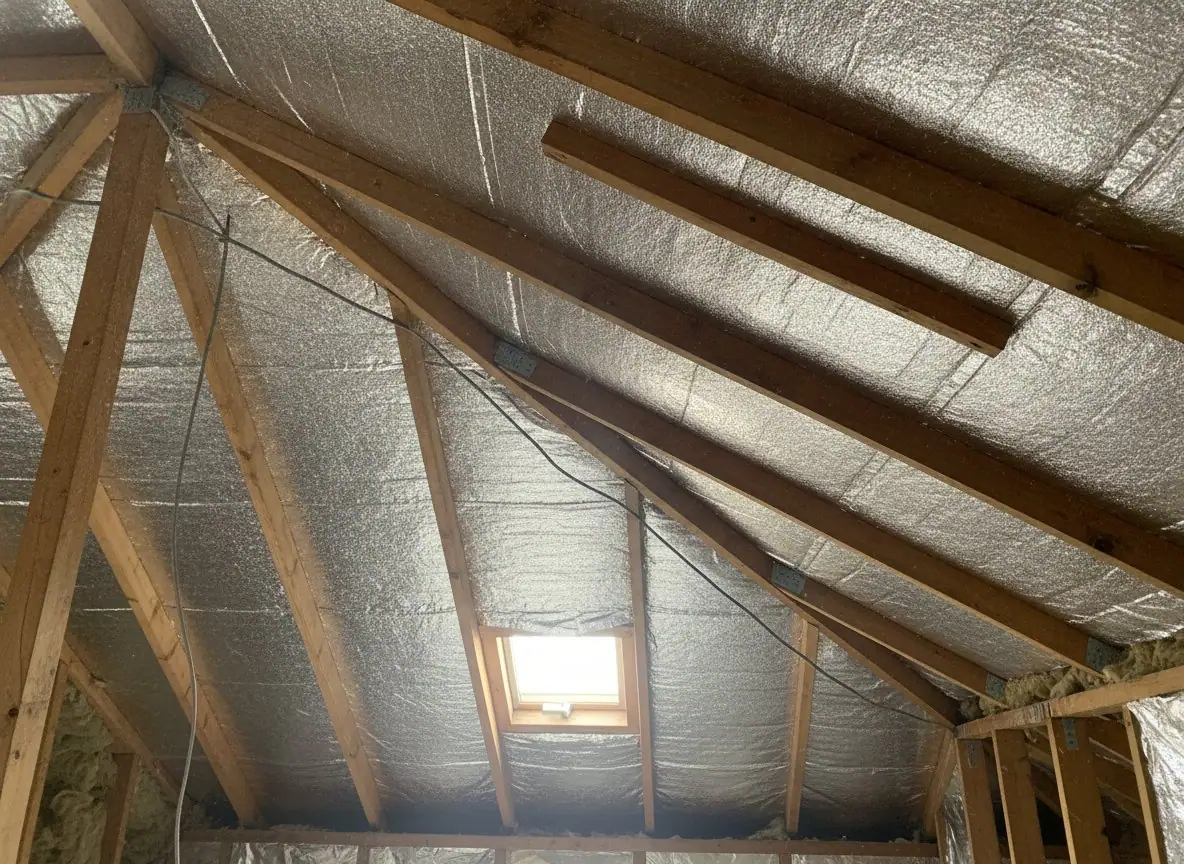
Our technician distributes material evenly across the attic floor, using depth gauges placed at multiple points to ensure consistent coverage reaching the Title 24-compliant depth for R-38, R-49, or R-60 as specified. In Irvine’s hillside homes with complex ro
- 06
Final Inspection and Documentation (30–60 Minutes)
We perform a post-installation inspection, verify depth measurements, photograph the completed work, and provide a written summary of R-values achieved — documentation that can be used for utility rebate applications through Southern California Edison’s Home E
- 07
Site Cleanup and Homeowner Walkthrough
We remove all equipment, seal the attic access, and walk you through the completed work with recommendations for ongoing attic maintenance.
Blown-In Insulation Methods and Approaches
1. Open-Blow Attic Application
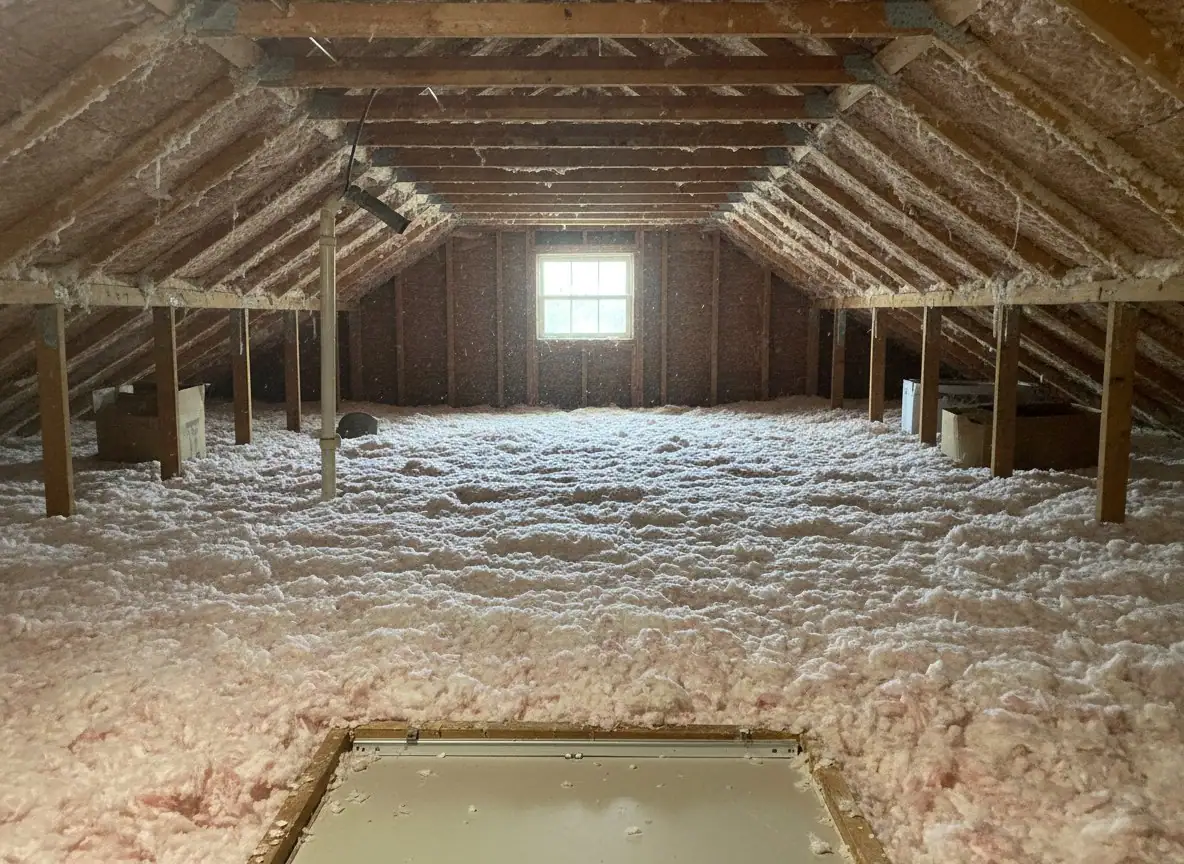
The most common method for Irvine homes, open-blow involves distributing loose-fill material freely across an open attic floor. This is ideal for flat or low-slope attic decks common in Woodbridge and Northwood ranch-style homes. Depths of 14–20 inches of blown cellulose or fiberglass achieve the R-38 to R-60 range required by California Title 24 in Climate Zone 8.
2. Dense-Pack Wall Cavity Application
Used for insulating existing walls without opening drywall, this method involves drilling small holes (typically 2 inches in diameter) through exterior siding or interior drywall and blowing cellulose at high density (3.5–4.0 lbs per cubic foot) to fill the wall cavity completely. This approach is commonly used in Irvine’s 1980s-era two-story homes in Westpark and University Park that have uninsulated exterior walls.
3. Stabilized or Spray-Applied Blown-In
In attics with significant air movement — particularly relevant in Irvine’s hillside communities prone to Santa Ana-driven attic air currents — stabilized blown-in insulation uses a small amount of water or adhesive binder mixed with cellulose to reduce settling and fiber migration. This method maintains consistent R-value performance over time.
4. Hybrid Blown-In and Spray Foam Systems
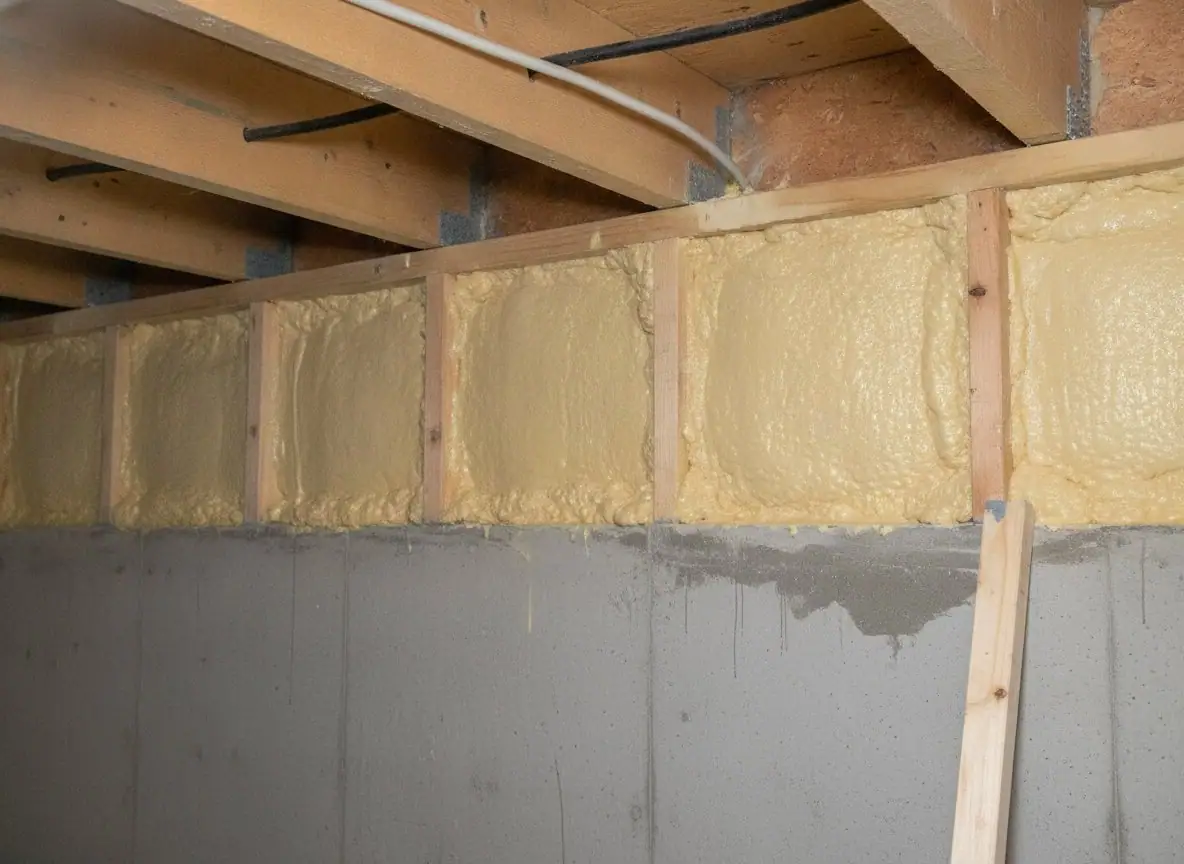
For maximum performance in high-end Irvine properties — common in Turtle Rock, Shady Canyon, and Quail Hill — we combine a 2-inch closed-cell spray foam layer at the attic floor with blown-in cellulose on top. The spray foam provides an air and vapor barrier, while the blown-in layer achieves the required total R-value. See our spray foam insulation page for details on this approach.
5. Crawl Space Blown-In Application
Some older Irvine homes, particularly in University Park and portions of Turtle Rock, have raised foundations with accessible crawl spaces. Blown-in insulation can be installed between floor joists to improve comfort in first-floor rooms. This works in tandem with our crawl space insulation services.
Blown-In Insulation Cost in Irvine, CA
Understanding the cost of blown-in insulation helps Irvine homeowners budget accurately and evaluate the return on investment. Pricing in Orange County reflects both material costs and the region’s higher labor rates relative to the national average.
Typical Price Ranges
- Attic blown-in insulation (open-blow, new install): $1.50–$2.50 per square foot, or approximately $1,800–$4,500 for a typical 1,800–2,200 sq ft Irvine home attic
- Attic blown-in with prior insulation removal: Add $1.00–$1.75 per square foot for removal, bringing total to $3,000–$7,500 depending on existing conditions
- Dense-pack wall insulation: $3.00–$5.50 per square foot of wall area, averaging $2,500–$6,000 for a typical exterior wall treatment
- Hybrid spray foam + blown-in system: $4.00–$7.00 per square foot of attic floor, totaling $5,500–$12,000 for large or premium Irvine properties
Read moreShow less
Factors That Affect Your Irvine Project Cost
- Attic accessibility: Low-slope or complex roof framing common in Irvine’s 1970s homes increases labor time
- Existing insulation condition: Contaminated or rodent-damaged insulation requires removal before new material is installed
- Target R-value: Achieving R-60 versus R-38 requires approximately 40–50% more material
- Material choice: Cellulose is typically $0.15–$0.25 per square foot less expensive than fiberglass loose-fill
Rebates and Incentives
Southern California Edison offers rebates of $0.10–$0.15 per square foot for qualifying attic insulation upgrades in Irvine. The federal Inflation Reduction Act’s 25C tax credit allows homeowners to claim up to 30% of insulation costs (up to $1,200 per year). Call us at 949-710-2596 to discuss how these programs apply to your project.
Blown-In Insulation Services Across Irvine Neighborhoods
Woodbridge (Developed 1975–1990)
One of Irvine’s original master-planned villages, Woodbridge features single-story and two-story homes with low-pitch rooflines and attics that are often severely under-insulated by current standards. Many Woodbridge homes retain original fiberglass batts that have degraded to effective R-values of R-11 or less. Blown-in insulation upgrades in this community are among the highest-impact energy improvements available.
Northwood (Developed 1978–1993)
Northwood’s mix of attached condos and detached single-family homes presents varied insulation challenges. Wall cavities in many 1980s-built units are completely uninsulated, and shared-wall construction requires careful dense-pack application. Our team is experienced with Northwood’s HOA requirements and works within community guidelines.
Turtle Rock (Developed 1971–1985)
Set against the hillsides of the Irvine foothills, Turtle Rock homes face elevated Santa Ana wind exposure and more extreme temperature swings than lower-lying Irvine communities. Homes here benefit from higher R-value targets (R-49 to R-60) and stabilized blown-in applications to prevent fiber migration in the windier attic environments.
Portola Springs and Great Park Neighborhoods (Developed 2005–Present)
Newer construction in these communities was built to more current Title 24 standards, but many homeowners are upgrading to R-49 or R-60 to maximize comfort and take advantage of SCE rebate programs. These newer homes often feature spray foam hybrid systems for premium performance.
Blown-In Insulation Maintenance Tips for Irvine Homeowners
- Inspect attic insulation annually: Each fall before Santa Ana season, visually check your attic insulation depth using a ruler or depth gauge. Insulation measuring less than 10 inches may have settled below effective performance thresholds.
- Check attic ventilation after high-wind events: Santa Ana winds can displace lightweight insulation near attic vents. Ensure blown-in material has not been pushed away from eave areas after significant wind events.
- Seal attic access hatches: In Irvine’s warm climate, an unsealed attic hatch can negate significant insulation value. Use weatherstripping and an insulated cover rated R-15 or higher.
- Monitor for pest activity: Inspect for signs of rodents entering from the Irvine Open Space Preserve, particularly in hillside properties near Turtle Rock and Quail Hill. Early detection prevents insulation contamination.
- Keep attic ventilation clear: Do not block soffit vents with blown-in material. Maintain baffle channels at all eave locations to preserve airflow and prevent moisture buildup.
- Address roof leaks immediately: Water saturation permanently degrades blown-in cellulose insulation. After any heavy rainfall — including the atmospheric river events that periodically affect Irvine — check for moisture in the attic.
- Schedule a professional inspection every 5–7 years: A professional assessment ensures R-values are maintained and identifies any new issues before they become costly problems.
Why Choose Home Energy Saver Insulation in Irvine
At Home Energy Saver Insulation, we are a dedicated insulation contractor serving Irvine and the surrounding Orange County communities with a focused specialty in residential and commercial insulation systems. Our team understands the specific performance demands of Irvine’s Climate Zone 8 environment — from the intense summer heat loads in Woodbridge attics to the wind-driven infiltration challenges in Turtle Rock hillside homes.
We offer a comprehensive range of insulation services under one roof, including attic insulation, spray foam insulation, fiberglass insulation, insulation removal, attic cleaning, rodent proofing, and crawl space insulation. This full-service capability means your project is handled by one experienced team from start to finish — no subcontractors, no coordination gaps.
Read moreShow less
We are committed to using high-quality materials, following California Title 24 compliance standards, and delivering installations that help Irvine homeowners qualify for Southern California Edison energy efficiency rebates. When you call 949-710-2596, you speak directly with our Irvine-area team — local professionals who know your neighborhood and your climate.
FAQ
Frequently Asked Questions About Blown-In Insulation in Irvine, CA
How much does blown-in insulation cost in Irvine, CA?
In Irvine, blown-in attic insulation typically costs between $1,800 and $4,500 for a standard 1,800–2,200 sq ft home when installing on top of existing material. Projects requiring prior insulation removal — common in homes with rodent damage in Woodbridge or Northwood — range from $3,000 to $7,500. Factors affecting price include attic accessibility, target R-value, and material choice. Call us at 949-710-2596 for a free, no-obligation estimate specific to your home.
How long does blown-in insulation installation take in an Irvine home?
For a typical Irvine attic without prior removal, installation takes 3–6 hours including assessment, air sealing, and blown-in application. Projects requiring insulation removal may take a full day. Wall cavity dense-pack projects vary by scope but are typically completed in one to two days.
What R-value do I need for my Irvine, CA home?
Irvine falls within California’s Climate Zone 8. California Title 24 requires a minimum of R-38 for attic insulation in new construction in this zone, with R-49 to R-60 recommended for maximum efficiency. Homes in Turtle Rock and other hillside communities with higher thermal demands benefit most from R-49 or R-60 installations.
Is blown-in insulation better than batt insulation for Irvine homes?
For retrofit applications — upgrading existing insulation without major renovation — blown-in insulation is generally superior because it fills gaps, conforms to irregular framing, and provides consistent coverage. In Irvine’s older tract homes from the 1970s–1990s, where framing irregularities and obstructions are common, blown-in insulation typically achieves better real-world performance than batt insulation.
Will blown-in insulation help with Irvine’s Santa Ana wind conditions?
Yes. Blown-in insulation, particularly stabilized cellulose at proper density, significantly reduces air infiltration driven by Santa Ana wind pressure differentials. Paired with comprehensive air sealing at top plates and penetrations, it is one of the most effective measures for reducing energy loss during high-wind events in Irvine.
Can I add blown-in insulation on top of my existing insulation?
In most cases, yes — as long as the existing insulation is clean, dry, and free of pest contamination. Our technicians assess your existing insulation during the initial inspection. In homes where existing material is compromised (common in Woodbridge and Northwood homes older than 30 years), we recommend removal first for best results.
Does Home Energy Saver Insulation help with Southern California Edison rebates?
Yes. We document all installation work with R-value certifications and depth measurements that meet SCE rebate program requirements. We can guide you through the application process and help you claim rebates of $0.10–$0.15 per square foot for qualifying upgrades, as well as the federal 25C tax credit of up to 30% of project costs.
Does blown-in insulation help with noise reduction in Irvine?
Blown-in cellulose insulation has excellent sound absorption properties due to its density and irregular fiber structure. In Irvine homes near the 5 or 405 freeway corridors, or in neighborhoods with proximity to John Wayne Airport flight paths, blown-in insulation provides a meaningful secondary benefit of noise attenuation in addition to thermal performance.
Get Your Free Blown-In Insulation Estimate in Irvine Today
If your Irvine home is losing energy through an under-insulated attic, unsealed walls, or degraded older insulation, Home Energy Saver Insulation is ready to help. Our team of professional insulation contractors serves all Irvine communities — from Woodbridge and Northwood to Turtle Rock, Portola Springs, and the Great Park Neighborhoods.
We provide free on-site assessments, clear written estimates, and installations that meet California Title 24 standards and qualify for Southern California Edison energy rebates. Stop overpaying on your SCE bill every summer — take the first step toward a more comfortable, energy-efficient home today.
Call Home Energy Saver Insulation now at 949-710-2596 to schedule your free consultation. Our Irvine-area team is standing by to assess your home and provide a customized blown-in insulation solution built for Southern California’s real climate demands.
Get in touch
Find insulation help near you
Request a free estimate online or give us a call — our team will follow up quickly.
- Call us(949) 710-2596
- Visit22 Thomas, Irvine, CA 92618
- HoursMon-Sun 07:00-19:00