Ceiling Insulation in Irvine, CA
Energy-Saving Ceiling Insulation for Irvine, CA Homes — Licensed & Insured
Professional ceiling insulation in Irvine, CA. Serving Woodbridge, Turtle Rock & all Orange County. Free assessments. Call (949) 710-2596 today.
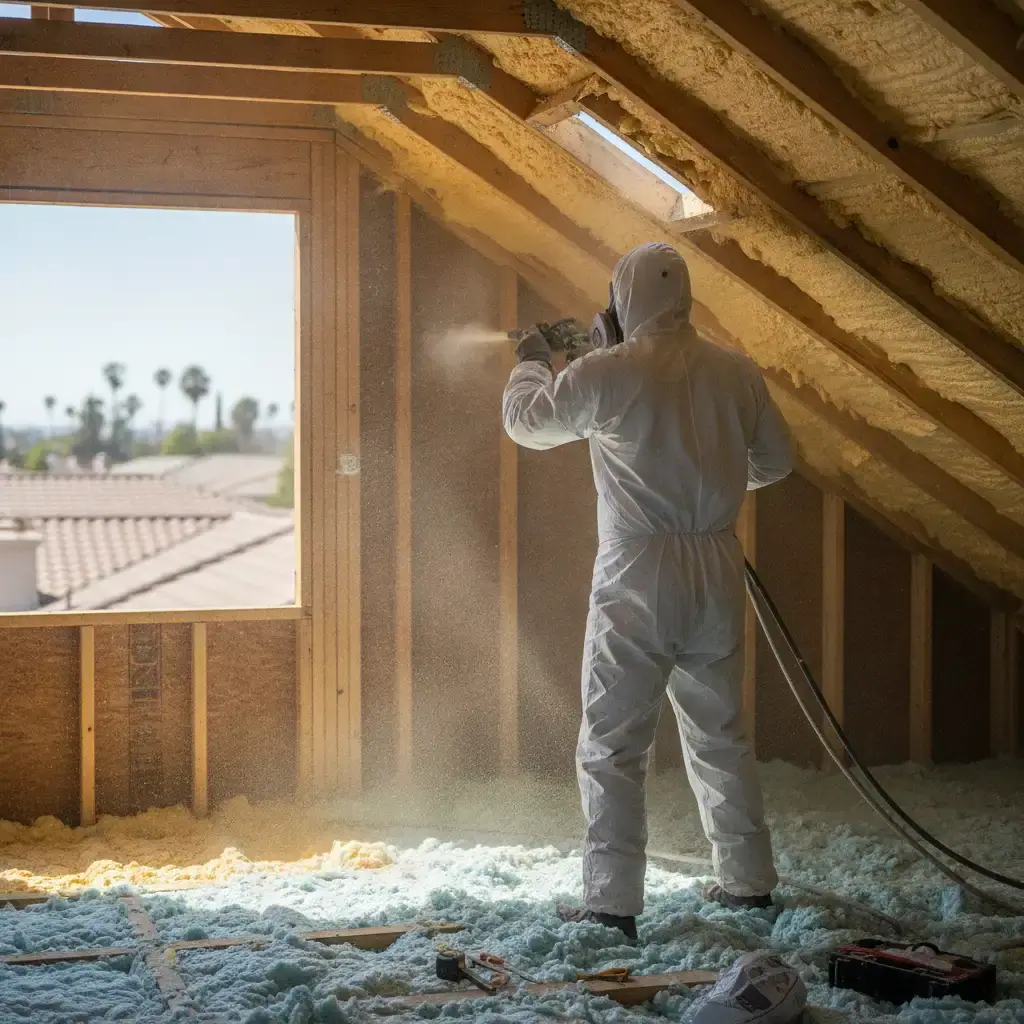
Ceiling insulation is the process of installing thermal and acoustic barrier materials directly above your living spaces — between interior ceilings and the attic floor or roof deck — to prevent heat transfer, reduce energy loss, and improve indoor comfort year-round. In Irvine, CA, where Mediterranean climate conditions drive air conditioning systems to work overtime through long, dry summers and where coastal marine air can infiltrate under-insulated homes, proper ceiling insulation is not optional — it is essential.
At Home Energy Saver Insulation, we specialize in ceiling insulation solutions engineered specifically for the building types, HOA communities, and microclimates found across Irvine and greater Orange County. Whether you live in a 1970s tract home in University Park or a newer master-planned residence in Portola Springs, our team delivers professional-grade ceiling insulation that immediately reduces energy bills, improves HVAC efficiency, and increases year-round comfort. Call us today at (949) 710-2596 to schedule a free assessment.
Understanding Ceiling Insulation in Irvine, CA
Ceiling insulation functions as the primary thermal boundary between your conditioned living space and the unconditioned attic above it. Heat naturally moves from warmer areas to cooler ones — in summer, this means radiant heat absorbed by Irvine’s sun-baked rooftops attempts to push downward into your home at rates that can raise attic temperatures above 150°F on peak days. In winter, warmth generated by your heating system escapes upward through an inadequately insulated ceiling. Proper ceiling insulation interrupts this movement using materials with measured resistance values, known as R-values.
The practice of insulating ceilings in Southern California residences became widespread following the energy crisis of the early 1970s, when California adopted Title 24 energy standards — among the strictest in the nation. Prior to this period, many Irvine homes built during the Irvine Company’s large-scale residential development campaigns of the 1960s and early 1970s were constructed with minimal insulation, if any. R-11 batts were considered standard at the time, far below today’s California Energy Commission recommendation of R-38 to R-60 for attic and ceiling assemblies in Climate Zone 8, which encompasses Irvine.
Read moreShow less
Irvine’s housing stock reflects its planned-city origins. The city was incorporated in 1971 and grew rapidly through master-planned villages including Woodbridge, Turtle Rock, Northwood, and Westpark. Each village contains distinct building eras and construction typologies — from single-story ranch homes with shallow-pitch roofs to modern multi-story attached townhomes with complex framing. This diversity means ceiling insulation needs vary significantly by neighborhood, construction year, and roof geometry.
Attached condominiums and HOA-managed communities — which make up a substantial percentage of Irvine’s residential real estate — present unique ceiling insulation challenges because shared wall and ceiling assemblies must be addressed with materials that also provide acoustic separation. Multi-family buildings built before 1985 are particularly likely to have degraded or absent ceiling insulation, making professional assessment critical before any upgrade. Learn more about attic insulation services in Irvine
Why Ceiling Insulation Is Needed in Irvine, CA
Irvine occupies California’s Climate Zone 8, a designation that reflects a Mediterranean pattern of hot, dry summers and mild, occasionally cool winters with significant diurnal temperature swings. The city sits approximately 10 to 15 miles inland from the Pacific Ocean, placing it in a transition zone between true coastal marine influence and the hotter inland basin climates found further east in Riverside and San Bernardino counties.
During summer months — typically May through October — Irvine regularly experiences daytime highs between 85°F and 100°F, with inland heat events occasionally pushing temperatures past 105°F. The September 2022 heat dome that blanketed Southern California set records across Orange County, with Irvine measuring sustained temperatures above 100°F for multiple consecutive days. During events like these, homes with inadequate ceiling insulation face attic temperatures exceeding 150°F, which forces HVAC systems into prolonged run cycles, dramatically increasing electricity consumption and mechanical wear.
Read moreShow less
Irvine’s geography also shapes its insulation needs in ways specific to its neighborhoods. Turtle Rock, situated on elevated terrain near the San Joaquin Hills, is exposed to stronger diurnal wind patterns than lower-lying areas of the city. Homes in this neighborhood experience greater convective heat loss in winter evenings, making ceiling air-sealing alongside insulation particularly important. By contrast, the Woodbridge community — built largely between 1975 and 1990 around its namesake artificial lakes — experiences higher humidity levels due to evaporative moisture from those water features, which can accelerate the degradation of older fiberglass batt insulation that absorbs moisture and loses R-value over time.
The Irvine Spectrum and Great Park Neighborhoods to the south and east of the city core sit in low-lying terrain that channels hot, dry Santa Ana wind events. These offshore winds, which historically peak in fall months — October through December — rapidly desiccate building materials and can cause older blown-in insulation to shift and compress, creating gaps in coverage that allow thermal bridging through ceiling framing members.
Irvine’s large inventory of HOA-governed communities adds another layer of urgency. Many condominium and townhome communities built during the 1980s and 1990s — including complexes in Westpark, Northwood Pointe, and Quail Hill — feature flat or low-slope roof assemblies that collect radiant heat far more aggressively than pitched roofs. These building types often have the most critically degraded ceiling insulation performance in the city and the most to gain from professional upgrades.
California’s building energy codes under Title 24 Part 6 continue to tighten requirements with each triennial update. As of the 2022 code cycle, newly constructed homes in Climate Zone 8 must achieve ceiling insulation performance of R-49 minimum. Homes built before 2006 — which represents the majority of Irvine’s residential housing — may have ceiling insulation as low as R-11 to R-19, making them significantly out of compliance with modern performance standards and leaving occupants paying substantially more in energy costs than necessary. Learn about insulation removal and replacement options
Free, no-obligation estimates
Talk to Home Energy Saver Insulation
Tell us what you need and we’ll take it from there.
Signs You Need Ceiling Insulation in Irvine, CA
Energy Performance Indicators
- Monthly electricity bills exceeding $200–$350 during summer months despite moderate thermostat settings
- HVAC system running continuously during peak afternoon hours (2 PM–6 PM) without reaching the set temperature
- Noticeable temperature differentials greater than 5°F between upstairs and downstairs rooms
- Air conditioning cycling on immediately after shutting off, indicating inability to hold conditioned air
Physical and Comfort Symptoms
- Ceilings that feel warm to the touch during afternoon hours — a clear sign of radiant heat transfer
- Hot spots concentrated in rooms directly below the roofline, particularly south- and west-facing rooms
- Drafts or cold air intrusion near ceiling light fixtures, recessed can lights, or ceiling fans during winter
- Unpleasant musty odors from the attic space infiltrating living areas, indicating old or wet insulation
Urgency Indicators
- Visible deterioration, settling, or gaps in existing insulation observed during attic entry
- Evidence of rodent activity, moisture staining, or mold growth in attic insulation — requires immediate removal and replacement
- Home was built before 1985 and has never had insulation professionally assessed or upgraded
Our process
Our Ceiling Insulation Process in Irvine, CA
- 01
Free In-Home Assessment (1–2 Hours)
Our certified technician visits your Irvine property to evaluate your current ceiling insulation type, depth, and R-value using calibrated depth gauges and thermal imaging when applicable. We inspect attic access points, assess ventilation conditions, and iden
- 02
Custom Scope of Work and Proposal (Same Day or Next Business Day)
Based on assessment findings, we provide a written proposal specifying recommended R-value targets, installation method, materials, and timeline. We account for Irvine’s Climate Zone 8 requirements and any HOA restrictions relevant to attic access and material
- 03
Insulation Removal (If Required) (1 Day)
Where existing insulation is degraded, contaminated, or compacted below effective performance thresholds, we safely remove it using HEPA-equipped vacuum systems. This is particularly common in Woodbridge and University Park homes built between 1971 and 1985. V
- 04
Air Sealing (2–4 Hours)
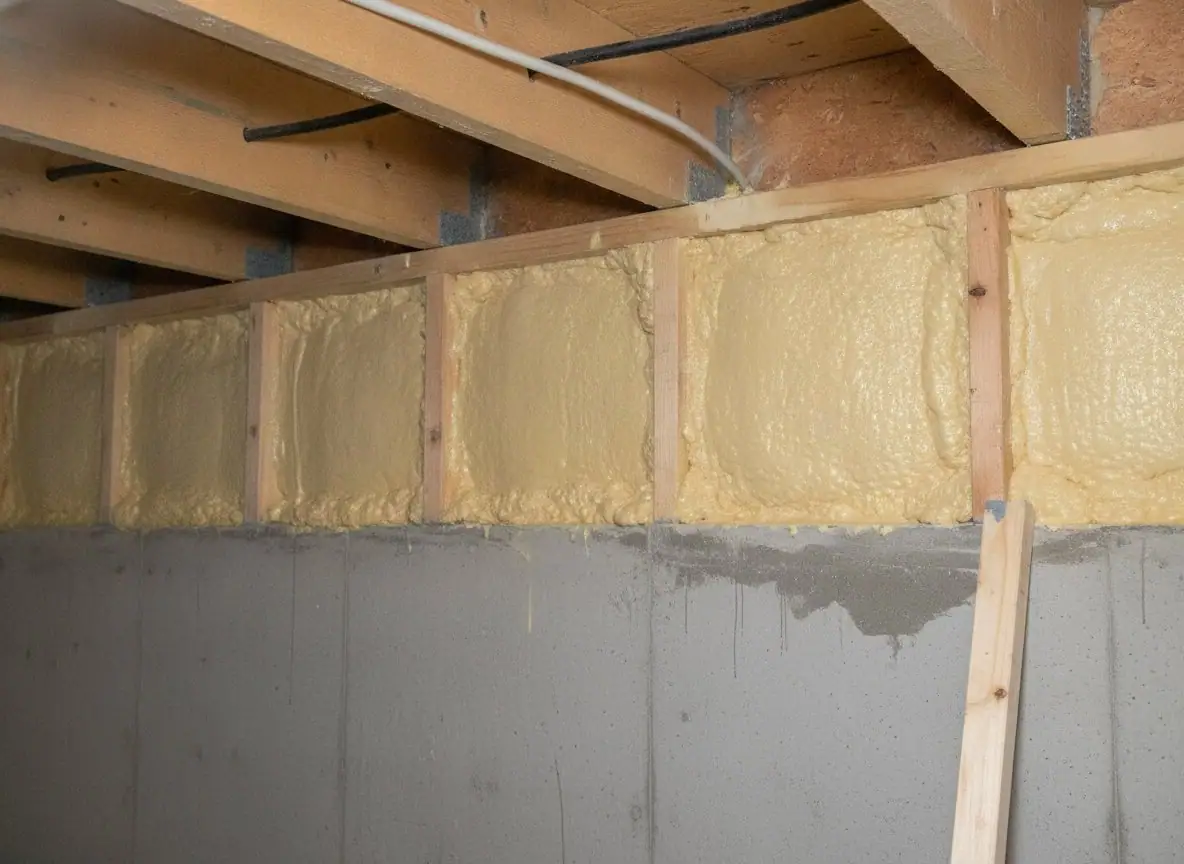
Before new insulation is installed, our team seals all ceiling penetrations — including recessed lighting housings, top plates, plumbing and electrical chases, and attic hatch frames — using appropriate sealants and spray foam. This step is critical in Irvine’
- 05
Insulation Installation (4–8 Hours Depending on Home Size)
We install blown-in fiberglass, blown-in cellulose, spray foam, or batt insulation depending on your home’s construction type, access limitations, and performance goals. Depth markers are placed throughout the attic floor to verify R-value compliance upon comp
- 06
Ventilation Verification and Baffle Inspection
We verify that soffit-to-ridge ventilation pathways remain unobstructed — a code requirement and critical factor for roof longevity in Irvine’s warm climate. Baffles are installed or repaired where insulation may block eave vents.
- 07
Final Walkthrough and Documentation
We provide you with a written completion report including installed R-value, materials used, and photos. This documentation supports any utility rebate applications through Southern California Edison’s energy efficiency programs.
Ceiling Insulation Methods and Approaches
Blown-In Fiberglass Insulation
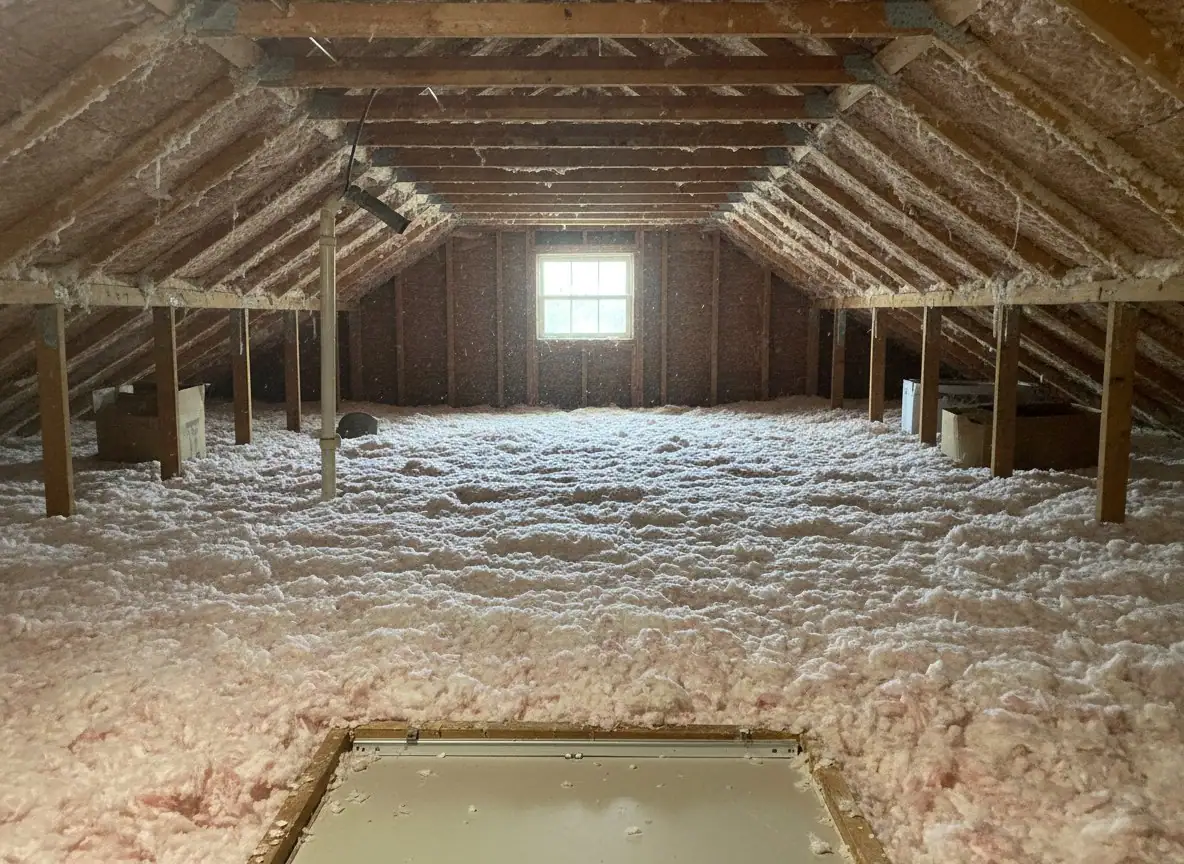
Blown-in fiberglass is our most commonly installed ceiling insulation product for Irvine homes. It achieves R-38 to R-60 coverage efficiently across irregular attic floor spaces and around obstructions like HVAC ducts and structural members. It is non-combustible, moisture-resistant, and ideal for Woodbridge-area homes where humidity from the lakes introduces elevated moisture risk. Learn more about blow-in insulation
Learn moreBlown-In Cellulose Insulation
Recycled cellulose is an environmentally preferred blown-in option treated with borate-based fire and pest retardants. It provides excellent air-sealing properties as it conforms tightly to framing irregularities. Well-suited for older Turtle Rock and Northwood ranch-style homes with relatively open attic floor plans.
Learn moreSpray Foam Insulation
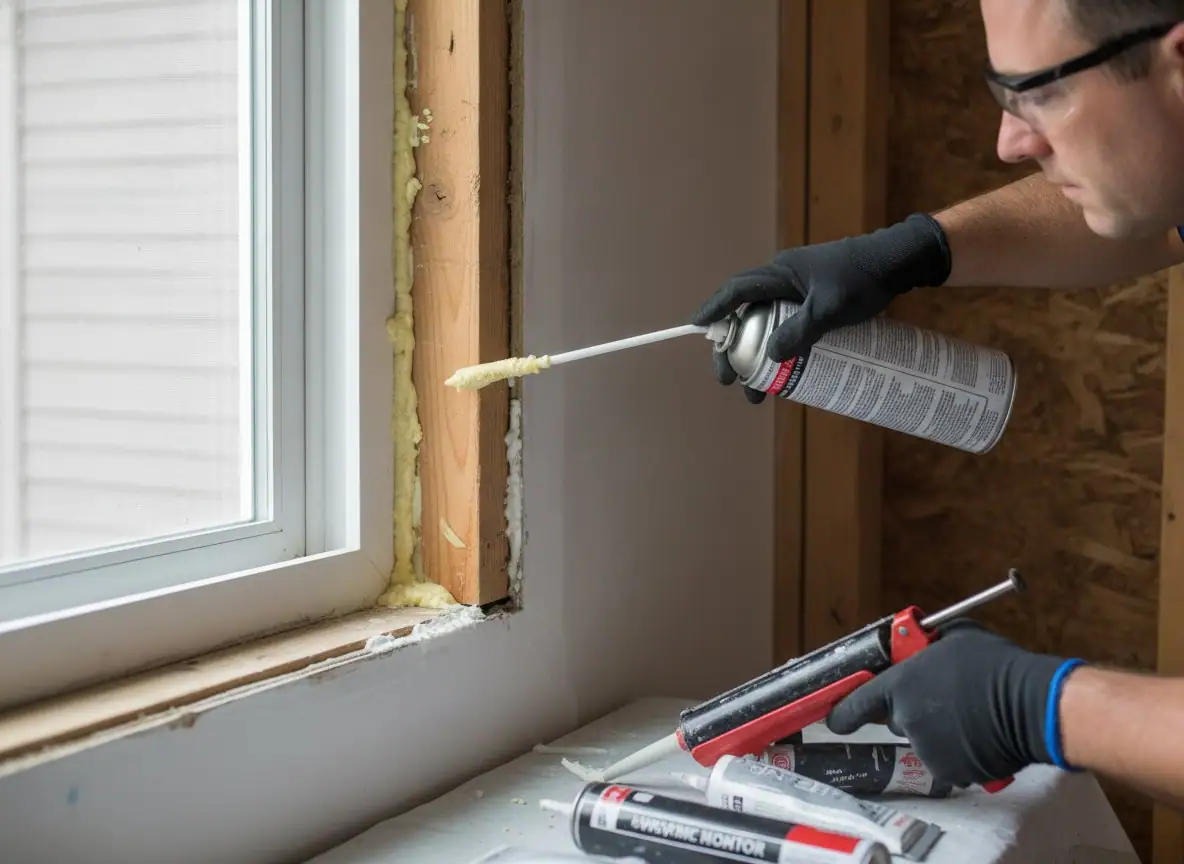
Closed-cell spray foam is applied directly to the underside of roof decking to create an unvented attic assembly — particularly effective for Irvine homes with HVAC equipment located in the attic space. By conditioning the attic, spray foam eliminates the temperature penalty imposed on ductwork running through a 150°F attic environment. Explore spray foam insulation options
Learn moreFiberglass Batt Insulation
Pre-cut fiberglass batts are used in ceiling assemblies with standard joist spacing accessible from below during renovation or where blown-in equipment access is restricted. Appropriate for new construction additions and accessible cathedral ceiling bays in Irvine townhomes.
Hybrid Assemblies
For maximum performance, we combine closed-cell spray foam for air sealing and vapor control at the ceiling plane with blown-in insulation above to achieve target R-values cost-effectively — a method particularly effective in Great Park Neighborhoods modern homes targeting above-code performance.
Ceiling Insulation Cost in Irvine, CA
Understanding ceiling insulation costs helps Irvine homeowners budget accurately and evaluate proposals. Pricing varies based on home size, current insulation condition, chosen method, and accessibility of the attic space.
Typical Price Ranges
- Blown-in fiberglass (upgrade to R-38): $1,200–$2,400 for a 1,200–2,000 sq ft home
- Blown-in fiberglass (upgrade to R-49–R-60): $1,800–$3,500 for a 1,500–2,500 sq ft home
- Blown-in cellulose (R-38 to R-49): $1,000–$2,200 for a comparable footprint
- Spray foam (closed-cell roof deck application): $3,500–$7,500+ depending on attic area and foam thickness
- Insulation removal prior to re-installation: $500–$1,500 depending on volume and contamination
- Air sealing package: $300–$800 as a standalone add-on
Read moreShow less
Irvine-Specific Pricing Factors
Irvine’s high proportion of attached condominiums and townhomes with restricted attic access can add 15–25% to labor costs compared to detached single-family homes with standard attic hatches. HOA-required project permitting or pre-approval processes may add scheduling time but not material cost.
Southern California Edison offers residential insulation rebates for qualifying upgrades under its Energy Savings Assistance and residential programs. Eligible Irvine homeowners may receive $200–$800 in rebates depending on scope, effectively reducing net project cost. We assist customers with rebate documentation at no additional charge. View detailed ceiling insulation cost information
Irvine Neighborhoods We Serve
Woodbridge (Built 1975–1990)
Woodbridge’s single-family homes and attached condominiums were built during a period of minimal energy code enforcement. Many retain original R-11 batt insulation approaching 40 years of age. Proximity to Woodbridge Lake and South Lake introduces moisture exposure that degrades fiberglass batts. We commonly perform full removal and blown-in replacement in this village.
Turtle Rock (Built 1977–1988)
Elevated hillside homes in Turtle Rock experience above-average wind exposure and diurnal temperature swings. Ranch-style and split-level homes with complex rooflines require careful attic mapping and baffle installation. Air sealing at ceiling penetrations is especially critical here.
Northwood and Northwood Pointe (Built 1983–2000)
A mix of single-family homes and attached communities characterizes Northwood. Homes built in the late 1990s may have code-compliant original insulation but benefit from upgrade to current R-49 standards. Northwood Pointe’s newer homes occasionally have spray foam needs for HVAC-in-attic configurations.
Great Park Neighborhoods (Built 2014–Present)
Irvine’s newest master-planned community features modern construction with higher baseline insulation levels, but many homeowners seek upgrade to premium R-60 performance or spray foam conversion for maximum efficiency in this sun-exposed, flat-terrain location. View all service areas in Orange County
Ceiling Insulation Maintenance Tips for Irvine Homeowners
- Inspect attic insulation depth annually: Check that depth markers installed during service remain visible and that insulation has not settled significantly below target R-value depth — particularly after Santa Ana wind events each fall.
- Seal attic hatch covers: Irvine’s warm climate means even small gaps around pull-down attic stairs or hatch covers allow significant heat intrusion. Install weatherstripped insulated covers rated at least R-10.
- Check recessed lighting fixtures: IC-rated (insulation contact) recessed lights should be verified after any attic work. Non-IC fixtures must remain clear of insulation per fire code.
- Maintain attic ventilation pathways: After any attic activity, verify soffit vents are not blocked. Blocked eave ventilation raises attic temperatures and accelerates insulation degradation in Irvine’s warm climate.
- Monitor for pest activity: Irvine’s climate supports active rodent populations. Inspect insulation for tunneling or nesting evidence every 1–2 years; contaminated insulation must be replaced promptly.
- Schedule professional re-assessment every 10 years: Insulation materials compress and settle over time. A professional depth check every decade ensures you maintain code-compliant R-value performance.
- Review SCE energy statements: Sustained increases in cooling costs during comparable summer periods may indicate insulation performance loss worth investigating. Learn about insulation replacement services
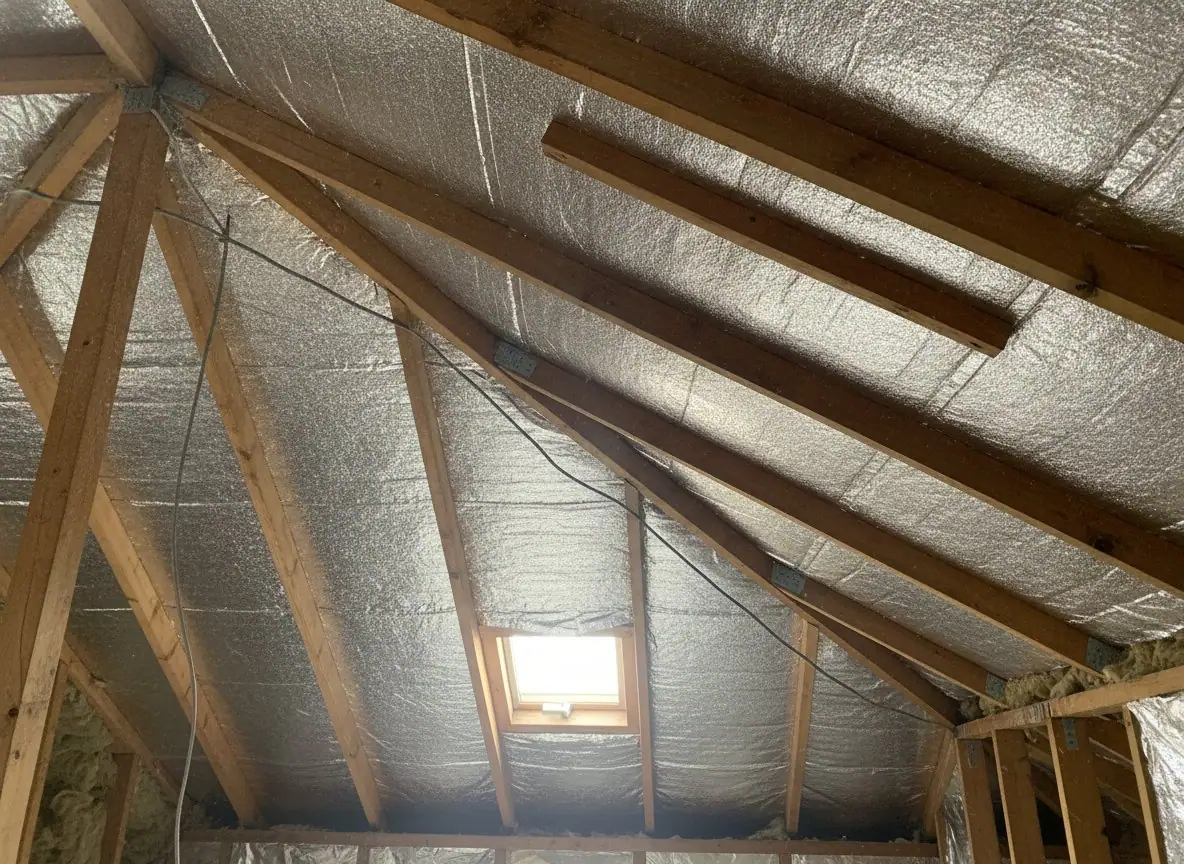
Why Choose Home Energy Saver Insulation in Irvine, CA
Home Energy Saver Insulation specializes in ceiling insulation and energy efficiency upgrades for Orange County homeowners, with deep familiarity with Irvine’s unique combination of master-planned community building types, Climate Zone 8 thermal demands, and HOA-governed installation requirements.
Our technicians understand the specific construction characteristics of Irvine’s village-era housing — from 1970s Woodbridge tract homes to contemporary Great Park residences — and tailor every installation approach to the actual conditions found in your attic, not a generic specification. We do not subcontract our installation work. Every project is completed by trained members of our own crew using professional-grade equipment.
Read moreShow less
We assist with Southern California Edison rebate documentation, provide written R-value verification reports, and offer post-installation support to ensure your ceiling insulation performs as specified. We serve all of Irvine and surrounding Orange County communities including Tustin, Newport Beach, Lake Forest, and Mission Viejo.
Ready to improve your home’s comfort and reduce energy costs? Call us at (949) 710-2596 for a free ceiling insulation assessment. Contact Home Energy Saver Insulation today
FAQ
Frequently Asked Questions: Ceiling Insulation in Irvine, CA
What R-value do I need for ceiling insulation in Irvine, CA?
Irvine falls within California Climate Zone 8, where the California Energy Commission recommends R-38 as a minimum for existing home upgrades and R-49 for new construction under the 2022 Title 24 code. Many energy efficiency experts recommend upgrading to R-49 or R-60 in Irvine to fully address summer heat gain, particularly in homes with HVAC ductwork running through unconditioned attic spaces. We assess your current insulation level and recommend the most cost-effective upgrade path for your specific home.
How much does ceiling insulation cost in Irvine, CA?
Most Irvine homeowners invest between $1,200 and $3,500 for blown-in ceiling insulation upgrades on a typical 1,500–2,500 sq ft home, depending on current insulation levels, attic accessibility, and target R-value. Spray foam applications for unvented attic assemblies range from $3,500 to $7,500 or more. Insulation removal, if required, adds $500–$1,500. Southern California Edison rebates may offset $200–$800 of eligible project costs.
How long does ceiling insulation installation take in Irvine?
Most residential ceiling insulation projects in Irvine are completed in a single day. The assessment and air sealing typically take 2–4 hours, and blown-in installation for a standard home takes an additional 2–4 hours. Spray foam applications may require a second day depending on scope. Your home remains fully livable throughout the process.
Do I need HOA approval for ceiling insulation in my Irvine community?
Ceiling insulation installed entirely within your attic space — with no exterior modifications — typically does not require HOA approval because it involves no visible exterior changes. However, some Irvine HOAs require vendor insurance certificates before allowing contractor access. We maintain full liability insurance and can provide documentation to any HOA management company upon request.
Can I just add insulation on top of my existing insulation in Irvine?
In many cases, yes. If your existing insulation is dry, free of pest contamination, and structurally intact — even if its R-value is below current standards — we can install new blown-in insulation directly on top to bring the total assembly to R-38 or higher. This is the most cost-effective approach. However, if existing insulation is water-damaged, mold-affected, or contains rodent activity — conditions we commonly find in pre-1985 Woodbridge and University Park homes — removal first is necessary for health, performance, and code compliance.
Will ceiling insulation really lower my energy bills in Irvine’s climate?
Yes, significantly. The Department of Energy estimates that properly air-sealing and insulating attics and ceilings can reduce heating and cooling costs by 10–20% annually. In Irvine, where air conditioning drives the majority of household energy consumption from May through October, the savings potential is substantial. Homes upgraded from R-11 to R-49 commonly see HVAC runtime reductions of 20–35% during peak summer months based on post-installation utility comparisons.
What is the difference between attic insulation and ceiling insulation?
These terms are often used interchangeably in the context of homes with attic spaces above living areas. Technically, “ceiling insulation” refers to insulating the ceiling plane itself — the thermal boundary between your living space and the unconditioned attic above — while “attic insulation” can also refer to insulating the roof deck or attic walls to create a conditioned attic. Both approaches reduce heat transfer; the correct choice depends on whether your HVAC equipment is located in the attic and your overall energy goals. Compare attic insulation approaches
Do you serve areas outside Irvine in Orange County?
Yes. Home Energy Saver Insulation serves all of Orange County, including Fountain Valley, Huntington Beach, Santa Ana, Anaheim, Costa Mesa, Fullerton, Newport Beach, Mission Viejo, Laguna Beach, Laguna Niguel, Lake Forest, Tustin, Westminster, Aliso Viejo, Brea, Buena Park, Garden Grove, Laguna Hills, and Quail Hill. View our complete Orange County service area
Get Your Free Ceiling Insulation Assessment in Irvine, CA
If your Irvine home is running your air conditioner constantly during summer, if you notice rooms that never reach a comfortable temperature, or if you simply have not had your ceiling insulation professionally evaluated in the past decade, now is the time to act. Upgrading ceiling insulation is one of the highest-return home improvements available to Irvine homeowners — reducing energy costs, improving comfort, and increasing home value.
Contact Home Energy Saver Insulation today to schedule your free, no-obligation ceiling insulation assessment. Our team serves all of Irvine and Orange County. Call us at (949) 710-2596, or submit your information online and we will contact you within one business day. Do not spend another Irvine summer paying for energy that is escaping through your ceiling.
Get in touch
Find insulation help near you
Request a free estimate online or give us a call — our team will follow up quickly.
- Call us(949) 710-2596
- Visit22 Thomas, Irvine, CA 92618
- HoursMon-Sun 07:00-19:00