

Spray Foam Insulation in Irvine, CA
Energy-Saving Spray Foam Insulation for Irvine, CA Homes — Licensed & Insured
Get expert spray foam insulation in Irvine, CA. Home Energy Saver offers attic, crawl space & wall foam solutions. Call (949) 710-2596 for a free estimate.
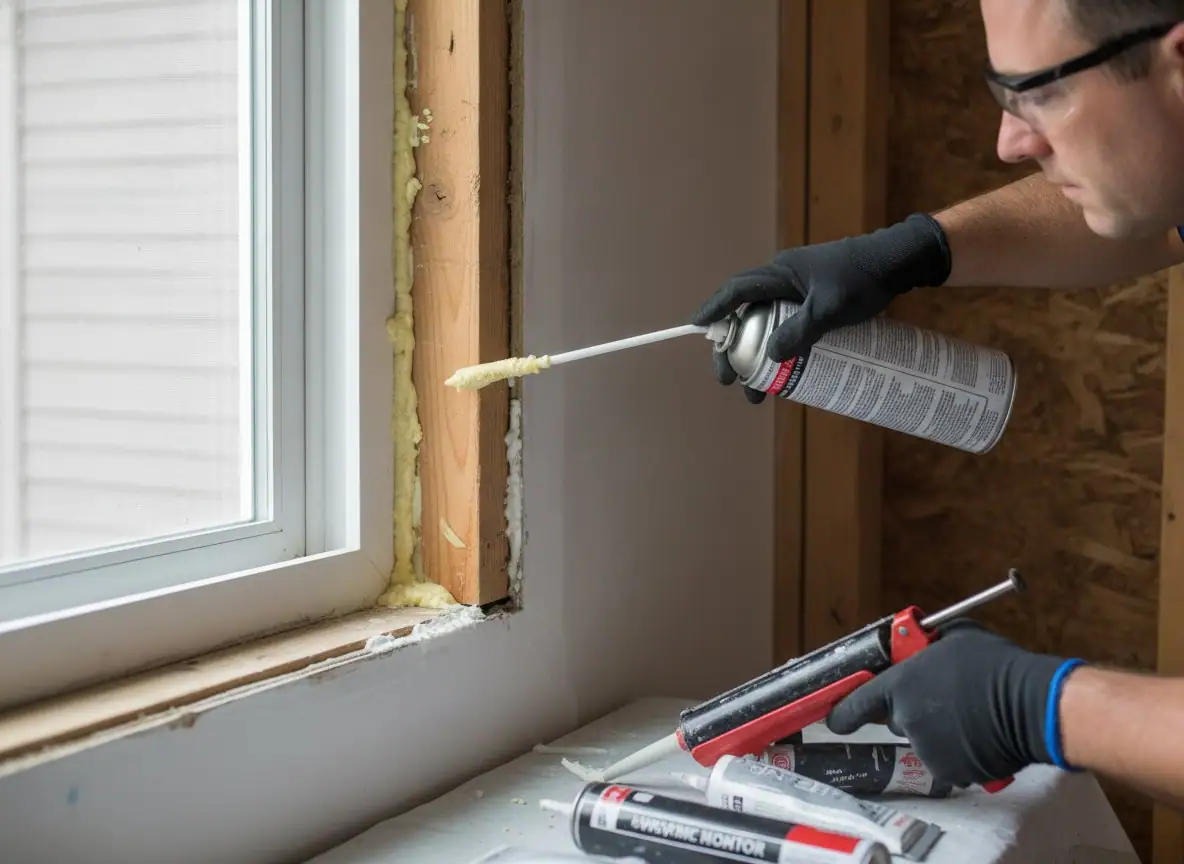
Spray foam insulation is one of the most effective thermal and air-sealing solutions available for residential and commercial buildings. Applied as a liquid that expands into a solid foam barrier, it fills gaps, cracks, and cavities that traditional insulation materials simply cannot reach. The result is a continuous, airtight envelope that dramatically reduces energy transfer and moisture infiltration.
Irvine’s unique Mediterranean climate — with summer temperatures frequently climbing above 90°F and marine layer humidity rolling in from the Pacific — creates specific insulation challenges that demand a precision solution. The city’s rapidly expanding master-planned communities, tech corridors, and mixed-use developments each carry distinct building envelope needs. At Home Energy Saver Insulation, we have deep familiarity with Irvine’s construction landscape, local building codes, and the microclimatic conditions that affect energy performance across every neighborhood. Whether you own a 1970s tract home in University Park or a new build near the Irvine Spectrum, our spray foam insulation services are calibrated to your property’s exact requirements.
Understanding Spray Foam Insulation
Spray foam insulation was first developed in the 1940s as a derivative of polyurethane chemistry, but it did not enter widespread residential use until the energy crises of the 1970s forced builders and homeowners alike to rethink thermal performance. Today, it is recognized by the U.S. Department of Energy as one of the highest-performing insulation products on the market.
The material comes in two primary formulations. Open-cell spray foam has a soft, sponge-like texture after curing and achieves an R-value of approximately R-3.5 to R-3.8 per inch. It is vapor-permeable and highly effective at sound attenuation, making it popular in interior wall cavities and for soundproofing applications. Closed-cell spray foam is denser, more rigid, and delivers an R-value of R-6 to R-7 per inch — nearly double that of fiberglass batts at equivalent thickness. Its closed cellular structure also functions as a Class II vapor retarder, making it the preferred choice for attics, crawl spaces, and exterior wall assemblies in climates with significant humidity swings.
Read moreShow less
In Irvine specifically, spray foam has gained strong traction across several building types. The city’s large inventory of master-planned single-family homes — many constructed between 1970 and 2000 in communities like Woodbridge, Northwood, and Turtle Rock — often feature attic assemblies and wall cavities that were originally insulated with fiberglass batts that have since settled, compressed, or become moisture-compromised. Newer developments in communities like Portola Springs and Great Park Neighborhoods are incorporating spray foam at the construction phase to meet California’s Title 24 energy efficiency standards, which have grown significantly more stringent since their first adoption in 1978.
Commercial properties along the Irvine Business Complex (IBC) and technology campuses near UC Irvine also benefit from spray foam’s ability to create consistent thermal conditions across large roof decks and curtain-wall assemblies. The product’s adhesive properties bond it directly to concrete, wood, metal, and drywall substrates, making it highly versatile across Irvine’s diverse commercial building stock.
Learn more about our attic insulation services
Why Spray Foam Insulation Is Needed in Irvine, CA
The Irvine Climate Profile
Irvine sits in a transitional climate zone — California Climate Zone 8 under the California Energy Commission’s classification — that experiences hot, dry summers and mild, occasionally damp winters. Average July high temperatures hover around 88°F, but inland heat events regularly push readings above 100°F. The Santa Ana winds, which typically peak between October and April, drive extreme temperature swings of 20°F or more within a 24-hour period. During the October 2019 Saddle Ridge Fire event and the wind events of January 2021, Irvine recorded sustained wind speeds exceeding 60 mph and relative humidity drops to single digits. These conditions stress building envelopes and expose any gaps in insulation coverage.
Simultaneously, marine layer fog and coastal moisture from nearby Newport Bay and the Bolsa Chica Wetlands — located roughly 8 to 12 miles west — push overnight humidity levels above 80% during spring months. This diurnal humidity swing between bone-dry afternoons and moisture-laden nights creates ideal conditions for condensation inside poorly air-sealed wall assemblies and attic spaces.
Aging Housing Stock and Code Changes
A significant portion of Irvine’s housing inventory was built before California’s modern energy codes took effect. University Park, one of Irvine’s earliest planned neighborhoods with homes dating to 1971, and Turtle Rock, developed heavily through the late 1970s and 1980s, contain thousands of homes with original fiberglass batt insulation. Fiberglass loses effective R-value when compressed or when air moves through it freely — a condition called convective looping. In Irvine’s attics, where summer temperatures routinely reach 140°F to 160°F, degraded fiberglass insulation contributes to cooling loads that can add $80 to $150 per month to electricity bills during peak summer months.
Soil and Foundation Considerations
Irvine is underlain in many areas by the Trabuco formation and by expansive silty clay soils, particularly in the older Woodbridge and El Camino Real corridor neighborhoods. These soils hold and release moisture seasonally, increasing ground-level humidity that affects crawl spaces and slab-on-grade foundations. Crawl spaces in Northwood and Rancho San Joaquin neighborhoods commonly show evidence of moisture migration from below-grade soil, underscoring the need for closed-cell spray foam in crawl space applications.
Title 24 Compliance
California’s Title 24 Building Energy Efficiency Standards were updated in 2022, requiring new residential construction to achieve significantly higher envelope performance metrics than prior code cycles. Spray foam, particularly closed-cell spray foam in attic and wall assemblies, is one of the most efficient paths to compliance and is increasingly specified by architects and contractors working on Irvine’s active new construction pipeline, including the ongoing Great Park Neighborhoods development.
Explore our crawl space insulation solutions
Free, no-obligation estimates
Talk to Home Energy Saver Insulation
Tell us what you need and we’ll take it from there.
Signs You Need Spray Foam Insulation in Irvine
Energy and Comfort Symptoms
- Monthly electricity bills exceeding $200 to $300 during summer months despite moderate AC usage
- Rooms that are consistently 5°F or more warmer than the rest of the house, particularly second-floor bedrooms in Woodbridge-era two-story homes
- HVAC system running continuously during July and August without reaching the thermostat setpoint
- Noticeable drafts near exterior walls, recessed lighting fixtures, or attic hatches
Moisture and Air Quality Indicators
- Musty odors in crawl spaces or lower-level rooms, especially after spring rains
- Visible moisture staining or mold growth on attic sheathing or rafters
- Condensation forming on interior window frames during winter mornings
- Unexplained allergy symptoms indoors, which may indicate outdoor air infiltrating through unsealed gaps
Structural and Visual Warning Signs
- Settled, flattened, or discolored fiberglass batts visible through an attic hatch
- Gaps around pipe penetrations, electrical boxes, or recessed lights in the ceiling
- Ice damming (rare in Irvine but can occur during exceptional cold snaps in foothill-adjacent areas)
- Increased noise from outdoor traffic or neighbors, indicating insufficient acoustic insulation in walls
If you notice two or more of these signs, contact Home Energy Saver Insulation at (949) 710-2596 for a diagnostic inspection.
Our process
Our Spray Foam Insulation Process in Irvine
We follow a structured, transparent process designed to deliver consistent, code-compliant results across Irvine’s diverse residential and commercial property types.
- 01
Initial Assessment and Energy Audit (Day 1 — 1 to 2 Hours)
Our certified technician visits your property to conduct a visual inspection of existing insulation, attic conditions, crawl space moisture levels, and exterior envelope integrity. We use a calibrated blower door test and infrared thermography to identify spec
- 02
Scope Development and Proposal (Day 1 to 3)
Based on the audit findings, we prepare a detailed written scope that specifies foam type, target R-value, coverage areas, and any preparatory work required. We identify any existing insulation that must be removed before spray foam application — a common need
- 03
Pre-Installation Preparation (Installation Day — 1 to 2 Hours)
Surfaces are cleared of debris and any incompatible materials. Electrical fixtures, HVAC equipment, and finishes are protected with plastic sheeting. In occupied homes, we coordinate timing to minimize disruption. Ventilation is confirmed for safe product appl
- 04
Foam Application (2 to 6 Hours Depending on Scope)
Our trained applicators use commercial-grade plural component spray rigs calibrated for Irvine’s ambient temperature and humidity conditions. Foam is applied in lifts — layers of specified thickness — to achieve uniform coverage without overheating during the
- 05
Curing and Inspection (2 to 24 Hours)
Spray foam cures rapidly but requires a minimum off-gassing period before re-occupancy — typically 24 hours for residential projects per manufacturer and California Air Resources Board guidelines. We conduct a post-application inspection to verify coverage dep
- 06
Final Cleanup and Documentation (1 Hour)
All protective sheeting and masking materials are removed. We provide a written completion report with R-values achieved, coverage maps, and photos — documentation that is valuable for Title 24 compliance records and future home resale disclosures in Irvine’s
Spray Foam Insulation Methods and Approaches
Closed-Cell Spray Foam
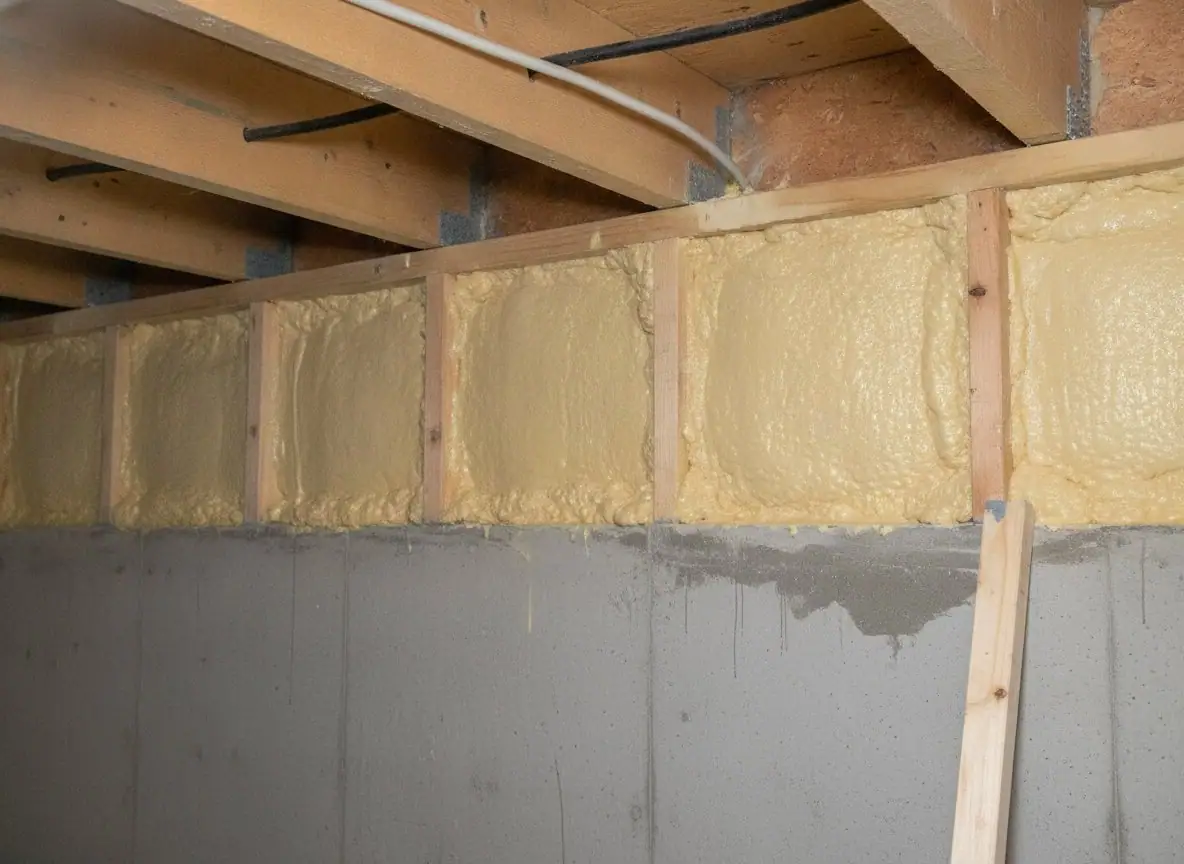
With an R-value of R-6 to R-7 per inch, closed-cell spray foam is the premium choice for Irvine attics, exterior wall cavities, and crawl spaces. Its vapor-retarding properties and structural rigidity make it ideal for homes in Irvine’s hillside areas where soil moisture and wind-driven rain are factors. It is also the required product type for unvented attic assemblies under California’s Title 24.
Open-Cell Spray Foam
Open-cell foam at R-3.5 to R-3.8 per inch is cost-effective for interior wall cavities, interior ceiling assemblies, and soundproofing applications. It is frequently used in Irvine’s attached townhome communities — such as those found in the Irvine Business Complex area and Westpark — where reducing sound transmission between shared walls is as important as thermal performance.
Flash and Batt Hybrid System
A thin layer (1 to 2 inches) of closed-cell spray foam is applied directly to the sheathing, followed by fiberglass or mineral wool batts filling the remainder of the cavity. This hybrid approach achieves a continuous vapor retarder and air barrier at lower cost than full-cavity closed-cell, and is commonly used in Irvine new construction to balance Title 24 compliance with project budget constraints.
Crawl Space Encapsulation with Spray Foam
For Irvine homes with vented crawl spaces — common in Northwood and Rancho San Joaquin — we apply closed-cell spray foam to the crawl space walls and rim joists, then seal the floor with a heavy-gauge vapor barrier, converting the crawl space to a conditioned or semi-conditioned space that dramatically reduces ground moisture intrusion.
Learn about our crawl space encapsulation process
Learn moreSpray Foam Insulation Cost in Irvine, CA
Understanding the investment involved helps homeowners and property managers plan effectively. Spray foam insulation costs in Irvine are influenced by material type, project scope, and local labor market conditions.
Typical Price Ranges
- Open-cell spray foam: $0.44 to $0.65 per board foot (one square foot at one inch thick), translating to approximately $1,000 to $2,500 for a standard 1,500-square-foot attic application
- Closed-cell spray foam: $1.00 to $1.50 per board foot, with a typical Irvine attic project ranging from $2,500 to $5,500
- Crawl space encapsulation with spray foam: $3,000 to $8,000 depending on crawl space dimensions and accessibility
- Flash and batt hybrid system: $1,500 to $3,500 for a typical Irvine single-family home attic
Read moreShow less
Factors That Affect Your Irvine Project Cost
- Existing insulation removal: Old fiberglass batt or blown-in removal adds $500 to $1,500 to the project cost but is often necessary for proper adhesion
- Attic accessibility: Irvine’s 1970s-era homes often have low-pitch rooflines and limited attic clearance, increasing labor time
- Project size: Larger homes in communities like Shady Canyon or Quail Hill command higher totals but generally lower per-square-foot rates
- California contractor compliance: CSLB licensing requirements and California Air Resources Board (CARB) compliant foam products may add modest cost premiums versus non-compliant alternatives
Most Irvine homeowners recover spray foam installation costs within 3 to 7 years through reduced utility bills. Call (949) 710-2596 for a no-obligation written estimate.
Learn about insulation removal and replacement costs
Irvine Neighborhoods We Serve
Woodbridge
Developed primarily between 1975 and 1990, Woodbridge’s single-family homes and condominium complexes frequently feature original fiberglass batt insulation that has reached the end of its effective service life. The neighborhood’s proximity to Woodbridge Lake also means elevated ground-level moisture, making closed-cell spray foam an important upgrade for crawl spaces and first-floor assemblies.
Northwood
Northwood homes, many built during the 1980s expansion of Irvine’s master plan, include a high proportion of two-story tract homes where air leakage at the top plate — the connection between the wall and attic floor — is a primary energy loss pathway. Spray foam air sealing at this interface is one of the highest-return insulation improvements we perform in this neighborhood.
Turtle Rock
Situated on elevated terrain with views toward the Santa Ana Mountains, Turtle Rock’s hillside homes experience greater wind exposure and more dramatic temperature swings than valley-floor communities. Many homes here have vaulted or cathedral ceilings that require unvented attic assemblies using closed-cell spray foam to meet current code.
Great Park Neighborhoods
As one of Irvine’s newest communities, Great Park Neighborhoods offers the opportunity to specify spray foam at the construction phase for maximum energy performance and Title 24 compliance from day one — a service we actively provide to builders and homeowners in this area.
Maintenance Tips for Spray Foam Insulation in Irvine
- Annual visual inspection: Check accessible spray foam surfaces in your attic and crawl space each fall before Santa Ana wind season for any signs of shrinkage, cracking, or separation from substrates
- Monitor crawl space humidity: Install an inexpensive hygrometer in your crawl space; readings consistently above 60% relative humidity signal a moisture management issue that can compromise foam performance over time
- Protect foam from UV exposure: Open-cell and closed-cell foam degrade when exposed to direct sunlight. Any foam visible through an attic vent or exterior penetration should be covered with an appropriate coating or thermal barrier
- Seal new penetrations promptly: After any plumbing, electrical, or HVAC work that creates new holes in insulated assemblies, have gaps sealed with compatible foam or caulk immediately
- Schedule an HVAC tune-up concurrently: A properly insulated home in Irvine will allow your HVAC system to right-size; having your contractor evaluate system sizing after insulation upgrades prevents over-cycling and premature equipment wear
- Check attic ventilation balance: If you have an unvented attic assembly with spray foam, confirm annually that all mechanical ventilation intakes remain unobstructed, particularly after the chaparral fire season when debris accumulation is common
- Document your installation: Keep your completion report and foam product data sheets with your home improvement records for Title 24 documentation and future real estate disclosure requirements in Orange County
Why Choose Home Energy Saver Insulation in Irvine
Home Energy Saver Insulation brings focused expertise in Southern California’s unique building and climate environment to every project we undertake in Irvine and across Orange County. We are not a national franchise applying a one-size-fits-all approach — we understand the specific performance demands of California Climate Zone 8, the nuances of Title 24 compliance for both new construction and retrofits, and the construction characteristics of Irvine’s master-planned communities across every development era.
Our technicians are trained in spray foam application techniques appropriate for Irvine’s ambient temperature and humidity conditions, which directly affect foam expansion rates and adhesion quality. We use only California Air Resources Board (CARB) compliant foam products and follow all Cal/OSHA safety protocols during application and re-occupancy.
Read moreShow less
We serve homeowners and commercial property managers throughout Irvine and the greater Orange County region — from Aliso Viejo and Laguna Niguel in the south to Anaheim and Fullerton in the north. Our commitment is straightforward: deliver energy performance improvements you can measure on your utility bills, installed by technicians who know your neighborhood and your building.
Call (949) 710-2596 to speak with an Irvine insulation specialist today.
Explore our blown-in insulation alternative services
FAQ
Frequently Asked Questions About Spray Foam Insulation in Irvine, CA
How much does spray foam insulation cost in Irvine, CA?
In Irvine, open-cell spray foam typically costs $0.44 to $0.65 per board foot, while closed-cell ranges from $1.00 to $1.50 per board foot. A complete attic insulation project for a typical Irvine single-family home runs between $1,500 and $5,500 depending on foam type, attic size, and whether existing insulation removal is required. We provide detailed written estimates at no charge — call (949) 710-2596 to schedule yours.
How long does spray foam insulation last in Irvine’s climate?
High-quality closed-cell and open-cell spray foam products are designed to last the lifetime of the structure when properly installed and protected from UV exposure. In Irvine’s climate, where attic temperatures can reach 140°F to 160°F in summer, closed-cell foam’s thermal stability is particularly advantageous. We have installed foam in Orange County homes that have maintained performance integrity for over 20 years.
Is spray foam insulation required under California’s Title 24 code in Irvine?
Title 24 does not mandate spray foam specifically, but its performance requirements for unvented attic assemblies — common in Irvine’s newer construction and cathedral ceiling homes — can effectively require closed-cell spray foam as the most practical compliance pathway. Our team is familiar with Irvine’s building department requirements and can advise on the most efficient code-compliant approach for your specific project.
How long does the installation take for a typical Irvine home?
Most residential spray foam projects in Irvine are completed within a single day. A standard attic application takes 4 to 6 hours including preparation, application, and initial cleanup. Re-occupancy is recommended after a minimum 24-hour off-gassing period per California Air Resources Board guidelines, so we typically schedule projects to begin in the morning, allowing homeowners to return the following day.
Can spray foam be installed over existing insulation in my Irvine attic?
In some cases, spray foam can be applied over existing blown-in cellulose or fiberglass without removal, but this depends on the condition, type, and configuration of the existing material. Wet, moldy, or pest-contaminated insulation must always be removed first. For many Irvine homes built in the 1970s and 1980s, removal is recommended to allow proper adhesion and to address any underlying moisture or air sealing issues. We assess this during our initial inspection.
Does spray foam insulation help with the noise from Irvine’s traffic corridors?
Yes. Open-cell spray foam in particular provides excellent sound attenuation due to its soft, absorptive cellular structure. Homes near the 405 Freeway, Jeffrey Road, or the Irvine Business Complex frequently report meaningful reductions in exterior noise infiltration after spray foam installation in exterior wall cavities and rim joists. Closed-cell foam also reduces noise but is less acoustically absorptive per inch than open-cell.
Will spray foam insulation help with the marine layer humidity that affects Irvine in spring?
Absolutely. Closed-cell spray foam functions as a Class II vapor retarder, significantly slowing moisture vapor transmission into wall and attic assemblies. During Irvine’s spring months when overnight humidity climbs above 80%, a properly installed spray foam air barrier prevents humid outdoor air from infiltrating conditioned spaces and condensing on cooler interior surfaces — one of the primary causes of attic mold growth in Orange County homes.
Do you serve areas outside Irvine?
Yes. Home Energy Saver Insulation serves all of Orange County, including Fountain Valley, Huntington Beach, Santa Ana, Anaheim, Aliso Viejo, Brea, Buena Park, Costa Mesa, Fullerton, Garden Grove, Laguna Beach, Laguna Hills, Laguna Niguel, Lake Forest, Mission Viejo, Newport Beach, Tustin, and Westminster. Call (949) 710-2596 to confirm service availability for your location.
Get a Free Spray Foam Insulation Estimate in Irvine Today
If your Irvine home or commercial property is losing energy through an under-insulated attic, unsealed crawl space, or drafty wall cavities, Home Energy Saver Insulation is ready to help. Our spray foam insulation services are calibrated to Irvine’s specific climate, construction types, and California energy code requirements — delivering measurable comfort improvements and lower utility bills you will notice within your first billing cycle after installation.
Do not let another Orange County summer pass with an underperforming building envelope. Contact our Irvine insulation specialists today:
- Phone: (949) 710-2596
- Service Area: Irvine and all of Orange County
Call now to schedule your free on-site assessment. Our team is standing by to help you make your Irvine property more comfortable, efficient, and code-compliant year-round.
Learn about our insulation replacement services
Get in touch
Find insulation help near you
Request a free estimate online or give us a call — our team will follow up quickly.
- Call us(949) 710-2596
- Visit22 Thomas, Irvine, CA 92618
- HoursMon-Sun 07:00-19:00